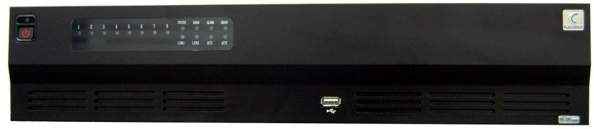
External security has been growing in the UK now for the last 25 years and has evolved  now to cater for all types of businesses. When most people think of external security they instantly think of cameras, and quite correctly. External security cameras form the first line of defence for anyone’s property. They are visible and pretty much everyone would recognise one. Cameras themselves though are never going to stop crime on their own. Viewing an incident the following day and watching people disappear with your externally stored goods is not much fun , especially if the perpetrators have taken steps to ensure they wont be recognised.

remotely monitored CCTV

This is where a proactive approach to security becomes important. The cameras for the external security systems should be connected to a system of sensors that can alarm the images through to the central station. The central station is where CCTV can be remotely monitored and live images watched and reacted to . The operator will generally have at his disposal the ability to tannoy and warn the perpetrator that they are being watched he can also phone keyholders to get to site and  catch the thieves.

The problem with remotely monitored CCTV systems is that the system relies on four parties to get it to work properly. Any failure in this chain of responsibility means that things could go wrong. The  four parties involved are the installer, the central station, the line provider and the end user (customer).

The customer is important because site management of the external security system is crucial. Overgrowth or flapping plastic are going to cause false alarms and cameras can get switched off as a result.

The question though is regarding central stations. Can they staff for the number of false alarms they get and still provide an efficient service? Should they be allowed to turn cameras off as a result of false alarms? External security is difficult because of all the elements that can affect a PIR sensor when it is installed outside.

Central monitoring stations often find themselves in a difficult situation. We sympathize when they have to make judgement calls. Make a bad one and its going to cost everyone money.

For this reason we recommend that you use a central station that has a good name out their. Farsight are one such company together with Couger and RVRC . These 3 companies seem to have a grip of external security and how it should be monitored. No one is perfect of course and they need to ensure they only work together with good installers. Remember monitoring CCTV alarms involves teamwork between all 4 parties involved.

The cost of CCTV monitoring can vary but a general rule of thumb would be around £300 per camera per annum.Very much cheaper than a guard and sometimes a lot more efficient but plenty of work behind the scenes is required to ensure you get a good system and it is administered and monitored correctly.
Looking out the window its raining again. Not only that but its starting to get dark its only 7 o’clock and its still August. A dank, dark and dreary day its started to get me thinking about external lighting.

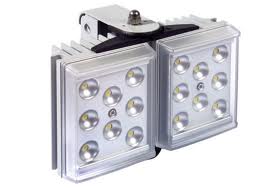
Raytec LED lighting

Involved in the day to day running of a CCTV company it reminded me that within a couple of weeks the service calls are all going to start pouring in. Whats more they are all going to say the same thing. “Lights not working. Bulbs blown,Lights burnt out, Lights won’t work automatically” and so the list will go on. It’s a symptom of the fact that the lights that give the CCTV systems clarity at night have probably been blown out all summer but it just happens that everyone seems to notice their problems at the same time. ie at 6 o’clock mid September when they all head home and set their systems. All of a sudden they notice they can’t see where they are going. Some even realize that their cameras can’t see where they are going either and so the influx of service calls begins.

The problem of course is that most CCTV systems out there still use halogen lighting systems, generally tripped by a PIR to bring lights on only when needed. Now these lights are cheap to buy and relatively cheap to install, but do they last …NO! Its actually not even the installers fault. Try buying a decent halogen light. The home DIY market has ensured that any light costing more than £10 and no one will pay for it. Its a shame because some years ago tungsten halogen lighting was made to a high standard and lights and bulbs would last forever. Unfortunately  these good manufacturers were put out of business by cheap imports.

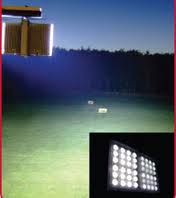
So what is the solution? Well its here and it comes in the form of high intensity LED lighting. Raytec immediately spring to mind as the market leaders. Their lights are cleverly designed and reliable. A huge marketing campaign has ensured that Raytec are number one when it comes to CCTV and to their credit they are also branching into street lighting. Ergonomic design ensures they look good and they give fantastic results.In addition Rytec led lighting gives great light spread and reduced costs once installed. The only issue is the cost of the initial unit, however in the case of Raytec we believe you actually get what you pay for.

So back to CCTV and surely lighting is becoming less important with more sophisticated cameras, right?  Well quite the opposite. Megapixel IP cameras and CMOS chips in HDCCTV cameras perform much less efficiently in the dark than analogue CCTV cameras. To this end as the marketplace swings towards HDCCTV,  lighting will actually become much more important. Now we suspect that it will not be too long before the market place starts to see lots of cheap LED lighting being used. The shift to HDCCTV will demand this and we think it will be beneficial to end users as there night time images will improve as a result.

Raytec led lighting

So maybe next year as more reliable led lighting starts to get installed across the UK and we start to see HDCCTV images with crystal clear clarity, we wont get quite so many service calls…………we live in hope!


Calsys Inc – a US based manufacturer – offers some interesting new products for the HD-CCTV market.

Currently, they do not have representation in the UK, although discussions are taking place with a few suitable partners.

Offering a range of products including:-

HDCCTV recorders – 4 & 8Ch, 720p and 1080p versions

HDCCTV cameras – CMOS Body and Minidome variants & CCD Body and Minidome variants

Calsys have been instrumental in developing and enhancing their own take on HDCCTV and we look forward to welcoming their products to the UK


360 Vision Technology Predator has been very well received in the UK Security market.

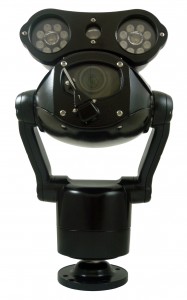
With options including Dual IR, Thermal (both 320 and 640 pixel versions) and also their Patented Green Technology Dual IR and White Light unit, Predator really can offer true Night Vision CCTV capabilities.

Current IR can provide illumination to 100m and that is set to be increased to 150m. In addition, their Dual IR and White Light offers the same 100m IR but with a combined 70m full colour White Light LED array – this soon to be increased to 100m.

Unlike static IR installed separately, 360 Vision mix both wide and spot to provide even distribution of both IR and White Light to ensure that both long and short distances are covered and also to eliminate object ‘glare’ so commonly seen on similar PTZ camera units.

360 Vision are now offering an on-site, night time service whereby end users and installers can see exactly what they can expect on their site – along with a video clip of the recording. This is a free service from 360 Vision and could prove extremely useful in gaining exact images from site before orders are placed!

For more details, head over to www.360visiontechnology.com and get in touch with their team!


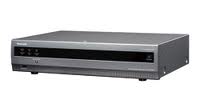
Here is a thought . Could the next generation of access control be completely free of any kind of intervention from the subject being granted access through the door. Consider this,  we will take a couple of Panasonic products from the iPro range and integrate these together in order that we may open doors. Using the Panasonic WV-SF346 vandal resistant dome camera and the WJ-NV200 NVR, the technology now exists to allow us to integrate doors into camera systems.

panasonic WJ-NV200
WJ-NV200

By using the facial recognition features with the WJ-NV200 we can open doors as a subject approaches. As long as his face is a match and he has access rights granted. So what type of advantages does this integrated access control system offer to the end user. No more expensive cards or tag systems. Video evidence of the time and date the subject passes through the door and simplicity with no expensive biometric readers or card readers. The route of facial recognition to open doors brings a high tec cost effective access control solution that many end users may buy into into. Just a thought!!!