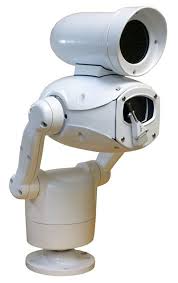
Take a look at the new Predator. It is all about integrated CCTV solutions. 360 vision have teamed up withThermal from FLIR
Radar from Navtech and Analytics from Ipsotek. All these technologies combine to make the new Predator the CCTV heavyweight camera that just about solves all your security requirements.
Bosch clear on IP video solutions.
A series of road-shows across the the UK are grabbing the attention of installers and giving Bosch the chance to demonstrate how they are using content based imaging in order to help detect and then track movement within a scene. During the demonstration Bosch are able to show just how far their products have advanced as they concentrate on HD and intelligent video analysis software to give installers extra features to temp their user base to upgrade to IP based products and HD camera technology.
The Dinion range of cameras has always been at the forefront of the Bosch marketing campaigns but now they have a new “star” . They actually call it the starlight camera and the light levels it can work down to are astonishing. With HD needing to overcome lighting issues this is a big step forward. Add to this new camera the Divar IP range of network video recorders and they could be onto something. The cost is and it offers a solution definatly competitive that will appeal to large and smaller installers alike. As the fear factor subsides over IP and more and more HD cctv solutions start to come on line Bosch seem to have found a combination of cameras and recording solutions alike that could help change the way CCTV is viewed by the general public.
Analytics are at the forefront of the new way to make the most of meta data and use this as a powerful way to upsell CCTV to a doubtful potential customer.
CCTV without lighting? Is an illuminator the answer?
A car without an engine, a rowing boat without oars, A train but no tracks. There are many examples but all the above are a complete waste of time without each other. It seems obvious, a no brainer but every year hundreds of businesses buy CCTV systems but ignore the need for lighting. As with the other items mentioned above, it will be a complete waste of time.
For years CCTV has been sold without taking lighting into consideration or at best dismissing it as something that can be looked into later, an afterthought perhaps.
In reality no one in the industry is unaware of the need for lighting , it’s just easier to push the issue to one side. In the past when all lights were mains driven it was difficult for CCTV installers to add this lighting and certificate it with all the electrical regulation that applied. Often CCTV engineers were unqualified and the cost of lighting often blew out the CCTV budget. So the responsibility was passed to the customer and inevitably it was forgotten.
Forgotten at least until the first time the customer needed to review his night time CCTV images. A mixture of grainy noise combined with intermittent flashes of headlights and shadows is all that will be seen, certainly there will be no evidence and ultimately disappointment. Even as installers push Dual chip camera technology the pictures are little improved.
The answer to these problems though are here. LED technology has come on leaps and bounds in the last 5 years. Light output from an illuminator is now way beyond what could have been expected in the past. Add to this the ability to power these units over POE and we have a solution that can be installed extremely easily.
What are the drawbacks? Well the illuminators are relatively expensive compared to halogen lighting, That is of course until you look into on-going costs. Clarius Illuminators are self-cleaning, maintenance free and exceptionally cheap to run. Whereas halogens blow for a pastime burn electricity like an electric fire and the fittings themselves seem to last no longer than a year.
However we have established that a camera without lighting is about as much use as a chocolate teapot so we need to bite the bullet. We need to specify lighting and we need to ensure it is the right light for the right job reducing light pollution.
Let’s look further into the future. HD CCTV is on the rise. Within the next 15 years there will be more HD cameras out there than analogue but HD CCTV cameras are very light hungry they need to be complimented by illuminators more than today’s cameras.
One final point Illuminators will vary in quality. Do ensure that the choice you make is a wise one , Buy cheap buy twice. Look into illuminators that use POE and chose a proven brand such as Clarius or Raytec.
As we look to the future we envisage night-time CCTV images that will be crisp clear and what is more…of use to the end user when they really need it.
Do Thermal CCTV cameras really have a place in the world of security today?
We have recently seen a rise in the number of companies starting to promote Thermal CCTV as a viable option to help end users protect their premises against crime and intrusion. This trend is currently a trickle but some in the industry seem to believe that Thermal CCTV really does have value and should be at the forefront of every specifiers mind. Difficult to believe when thermal cameras can retail from anything from £4000 to £25000 installed.
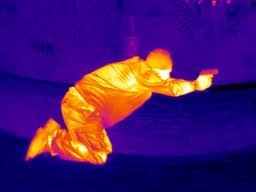
So let’s start with the different types of Thermal CCTV cameras on the market. We have a choice it seems. Thermal PTZ domes and Thermal statics. Some of the domes also combine a standard colour camera to compliment the thermal. The static thermal CCTV cameras tend to come with a variety of lens options and definition, the majority though concentrate on using lenses that mean the scene width will be narrow, feeling that perimeter protection is likely to be the main area where these cameras will sell.
At the fore-front of the industry we have the big manufacturers such as Flir, 360 Vision and Bosch. These giants of the industry have spent millions in development but some smaller guys are starting to break through and this is encouraging. What makes these manufactures want to invest so much in thermal when as we said earlier the prices are seemingly high to the end user? To be honest it’s one of those things you need to see to actually make you release the power of thermal. These cameras can see in ZERO light conditions, look through fog and rain, pick out movement in trees and bushes but most importantly they work brilliantly in conjunction with on-site security or high end analytics. The best until last though, the distance that they can realistically detect an intruder can be measured in Kilometres rather than meters and this makes them exceptionally cheap compared to their colour camera rival.
We asked earlier if they have a place in the market . Recent research has predicted that the use of thermal technology could increase by up to 25% in the next 5 years. A growth that will have quite an impact and reward those who have spent lots of time and money researching and producing Thermal CCTV camera technology.
The sort of scenario where we expect these cameras to be deployed are wide open spaces on critical infrastructure sites where intruders can do untold damage to electricity, communications or military establishments. As we said earlier perimeter protection suits thermal quite brilliantly it gives the watching guard the sort of information they need to do their job, lighting up the screen with a clearly defined image of an intruder in absolute darkness.
Central stations to are beginning to capitalize on Thermal CCTV camera technology to. With false alarms being a central stations biggest nightmare Thermal plus analytics is giving reliable alarm triggers and the clearly defined images leave the operators in no doubt if there is a human presence on site or not.
We have all seen the police camera action videos , so we all know just how good these images can be. Well now it’s not just the police who can apply this technology its actually the average business trying to protect its assets . That is good reason to belief then that Thermal really is the next big thing.
Are expectations of HD CCTV too high?
The world of security is currently buzzing with talk of HD CCTV and how it will be the making of the CCTV industry over the next 10 years. A word of caution though, we must be careful that we do not repeat the mistakes that have been made with analogue CCTV over the last 20 years.
The crux of the point we are making here is that customers want to pay the least money possible for a CCTV system. As a result, hard pressed salesmen oblige by consistently under specifying what the customer needs. Up against a host of competition it is all too easy to hope camera coverage and light levels will be enough for the price the customer wants to pay. Of course as soon as the first real incident occurs and the customer reviews their footage, desperate disappointment ensues and grainy staccato like images that are of little use to anyone are the disappointing result.
Let’s remember the company who actually specified the system correctly were dismissed from the tendering process because their price was too high , so in this whole sorry process everyone loses out.
So to my initial point regarding HD CCTV and whether our expectations are too high. Well in truth the fact is that the same rules apply. We must specify what is actually required to meet the customers’ needs and most importantly, his expectations.
Too often we see system set ups that lack the four basic requirements.
1) The correct number of pixels per meter to ensure facial or number plate recognition at the specified distance.
2) The correct lighting level at night.
3) The correct amount of storage capacity for the required number of days.
4) The correct network architecture, bandwidth and equipment such as quality switches and cable/transmission path.
All the above must be correct or the system as a whole will fall down and the customer, full of hope, will find once more the CCTV system he has purchased has let him down.
So how can we be sure we get this right? Well firstly we must put our trust in a provider who has a proven track record. His price may not be the cheapest but this is a sure sign that he is not taking short cuts and should be reassuring rather than an excuse to put the quote to one side. If he has paid attention, his sales pitch will pay due attention to the 4 points above, this should mean that he is doing his job properly. Finally don’t try to get too much out of a camera. The laws of physics will decide what can be achieved. Ultimately of course a quality brand using all the best components and installers will work out the better option but there is only so much a 5 megapixel camera can do, especially if it is deprived of light at night.
Light plays a huge part in the final image quality, don’t try to buy cheaply here either. A good quality IR illuminator makes all the difference and these are not the cheapest items to produce. However a good brand will ensure low maintenance levels and excellent reliability as well as actually producing the light levels a megapixel camera will need to operate properly at night.

So are our expectations of HD CCTV too high? The simple answer is no, quite frankly it’s the best thing for security, monitoring industrial processes and keeping track of health and safety issues that we have seen for a long time, however this is only true if the job is sold correctly. Short cuts and under funding will mean we will all be cast back to the disappointments of the past.