March Networks acquisition.

March networks a global provider of intelligent IP video solutions, today announced that it has entered into a definitive agreement  with Infinova (Canada) Ltd.Infinova is a company listed on the Shenzhen Stock Exchange and will integrate well with March. Infinova will acquire, through a statutory plan of arrangement, all of the issued and outstanding common shares of March Networks Corporation for C$5.00 per share in cash. In total the value of the transaction is approximately C$90.1 million. The takeover is subject to approval by the shareholders of both companies.March Networks and Infinova between them create one of the 10 largest global players in the video surveillance industry a powerful force will emerge and there is much to be gained by both parties from this merger. Infinova offers March Networks a broader geographic footprint, access to the world’s fastest growing market and a complementary fit with respective product lines. The merger is consistent with a strategy to accelerate growth and expand in the Asian market from March networks perspective.March Networks is established as one of the leading players in the video industry and Infinova will help to take the new company forward when they combine forces. This acquisition provides scale in all critical markets, as well as giving Infinova access to March Network’s IP technology. It is thought March will continue to operate independently from its Ottawa headquarters and maintain its name and brands. March will benefit from Infinova’s manufacturing expertise.
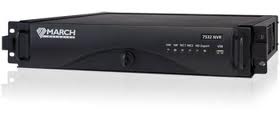
March Networks NVR

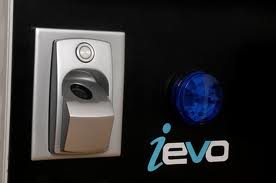
ievo have announced the release of their new fingerprint entry reader, the new Micro. The Micro is designed to give end users the opportunity to replace their internal access control readers with a more secure solution. The micro is fast, reliable and accurate and can be both mullion or surface mount to suit the aesthetics of the building.

fingerprint door entry reader

The main goal of  ievo is to pick up business by saving end users money in the long run on Fobs and cards that can be such a cost burden on today’s access control solutions. In addition the Micro can genuinely claim to increase security as well as being able to manage up to 8000 fingerprints. Specifically designed for internal use only the Micro also comes in a multitude of different colours.

The micro also integrates seamlessly into Paxton, ACT, BSB and Nortech. Other manufacturers can also be  linked into and ievo can give you more information on this on request. The biometric fingerprint entry reader is going to be popular with specifiers because it gives a competitive solution that can genuinely improve existing access control installations. Good looking and able to fit almost anywhere ievo have orders for the Micro prior to their release in the new year.

Multi-spectral imaging technology is what is used to ensure the Micro reads every time. Grease ,dirt, dust or moisture has little effect on read accuracy.

So ievo have continued to evolve and now with this cost effective internal fingerprint door reader they have ensured  that they will continue to be an important supplier for those looking for a biometric solution.

Avigilon are one of the fastest growing companies in Canada. The reasons are clear to us. Avigilon have taken the concept that quality will sell even in hard times. Once their demonstration has been seen its hard not to talk about both the company and the kit. Avigilon do it differently to anyone else out there. They take huge volumes of data and to give quality images but are able to manage it in such a way that it is presented to the end user with almost unbelievable clarity.

Avigilon iPhone app

Below we link to blogs about Avigilon and the Avigilon iPhone app and general information about Avigilon for those looking for an assessment of their products and their company.

Avigilon iPone app download the Avigilon iPhone app.

Information about Avigilon

Avigilon talk to integrated CCTV

For those that don’t know, the NSI is the regulatory body that oversees the security industry, in the old days they were only interested in Intruder alarms and to be fair the regulation they imposed and enforced rigorously with member companies was very helpful to the industry. It meant standards were good amongst members and insurance companies would only insure those clients who had their intruder alarm installed to a “NACOSS standard”. In a way this was jobs for the boys.  If you were in the club then it would exclude electricians from poaching your business just because they could do it cheaper and were not burdened with the paperwork that goes with a properly installed intruder alarm system.

NSI GOLD installer

The NSI went further though, if you were a company that wanted to embrace other disciplines within your portfolio such as CCTV and access control,  the NSI insisted that if you wanted to display the NSI logo on your company paperwork or vans,  then you also had to install CCTV and access control to their standards and pay for and issue certificates accordingly. OK this was just about bearable and the additional costs could be absorbed. However insurance companies did not drive end users to use NSI approved installers for CCTV and access control in the same way they did for Intruder alarms therefore the commercial advantage was not so great to be a member of the NSI club.

Further standards were introduced though such BS8418 for monitored CCTV in order to involve insurance companies and the Police and it was hoped they would then insist all monitored CCTV could only be done by the NSI members. All in all though this initiative failed, the insurers either did not care or found it was of no advantage to them to insist on BS8418 systems to be installed, the Police were overcome with apathy.

Now though we have a whole new ball game. IP CCTV is changing everything. Security companies are competing with IT integrators and the IT boys are totally unburdened with regulation.The playing field is not fair anymore and security companies are being weighed down by the NSI.

We need changes and we need them fast. What’s good for the goose is good for the gander. So NSI, either the IT integrators must be forced to issue certificates and install to the same high standards that is expected of security companies or CCTV must be deregulated to mean a company that installs both intruder alarms and CCTV does not have  suffer the overheads that the NSI brings with it.