HD CCTV over coax has gone from an untried theory into what is set to be one the  most interesting developments in the CCTV world since IP CCTV hit the scene 5 years ago . HD over coax has long been on the wish list of many CCTV installers. We all know the scenario of when a break in occurs, the images are just not good enough to recognise the perpetrators. Now we finally have the answer. That answer comes  in the form of  HD over coax. In the last two years there has been a trickle of companies producing HD SDI DVR’s and cameras, this has now started to become a flood as all the major players re- assess what will actually be selling most over the next 5 years.

IP CCTV has been pushed and manipulated in every form possible but has still to take the market by storm . The reason is simple, the cost to upgrade in a depressed market place has proved too much of a boundary to overcome for installers and end users alike. Customers want HD!  They expect to pay more for HD,  but in just about every case it means abandoning their investments from the past .ie their coax network. Add to this that most applications for HD are often only needed to be targeted on key areas and a whole new IP CCTV system seems too much over-kill for the benefits that will be gained.

Enter the HD SDI Camera, megapixel images over coax and a  HD SDI DVR that can incorporate existing analogue cameras together with  new HD CCTV solutions and suddenly you give the end user a real incentive to upgrade at a cost that is not going to frighten them off. One of the negatives of HD CCTV is often said to be that it lacks flexibility and future proofing. Well analogue CCTV has fundamentally remained the same for many years, its only weakness being poor images and stuttering recordings that lack credibility.

The reason for this? Well analogue has its limitations in the number of lines that can make up an image it can go no further as a technology. With HD CCTV we have addressed the issues, what else would you want from a CCTV system other than crisp clear images that work?

So can HD CCTV fill the gap in the market that has been sadly lacking for many years? Well quite simply yes. Quality images, quality recordings, the ability to enhance those recordings without the degradation normally associated with enhanced images. It’s cheaper and easier to install. Yes HD CCTV is here to stay !
 

HD CCTV is being touted as the answer to every installers dream when it comes to upgrading and enhancing existing analog CCTV systems. But how does it work and what are the shortfalls if any? HD SDI CCTV cameras can produce images that can achieve 720p and 1080p video at a full 30 frames per second. Add to this the fact that upon delivery there is  no latency or use of compression of the image and you start to see the attraction of this technology.

To enable installers however to reach a balanced view there is a need to ask if  HD CCTV can replace or even supersede IP based HD CCTV cameras?

Many in the CCTV industry have asked if IP solutions will be blown away by this new technology. Well firstly we need to consider that 80% of the UK market place is still analog CCTV solutions and HD CCTV in the form of  HD SDI is definitely at an advantage to take the share of upgrades. but is it flexible enough when it comes to integration and will the advance to 10 16 or even 20 megapixel IP cameras mean that HD CCTV will be dropped in favour of IP?

HDcctv benefits


Firstly we need to understand exactly how HD CCTV works as opposed to IP HD cameras.  HD CCTV uses coax and has been developed on the back of HDTV and the technology behind the pictures we see on our TV sets today. It is not dissimilar from a standard analog CCTV system and uses coax to carry images of up to 2.1 megapixels from the camera to the DVR. It does not use cat 5 or existing IT networks this means there is no compression required and as a result no latency.

The primary benefit  to CCTV integrators is the ease of installation. Because HD CCTV can use existing coax or is wired as a point to point system, any engineer with basic knowledge of CCTV can install it. No IP addresses, IT managers interfering or network issues to contend with. Quite simply its plug and play. This makes installation simple, uncomplicated and best of all cheaper than many IP based systems. No new cabling makes a retro fit installation far more commercially attractive than an IP solution.

The ability of HD CCTV to re-use the same cabling infrastructure as most traditional analog systems is though the main selling point together with images that will impress even the biggest sceptics of HD SDI CCTV. One of the largest costs in any analog system conversion is the changes to the cabling infrastructure. This technology allows organizations an easy, economical way to upgrade a legacy analog system to achieve the benefits of megapixel cameras.


One of the main challenges to HD CCTV and its uptake in the UK has been the lack of companies who are able to offer a cost effective HD SDI DVR this however has most definitely been overcome. IFSEC 2011 was the tipping point with HD CCTV systems being the star of the show. It was almost like the consumers had forgotten about IP CCTV. Still more competition is required and hybrid HD SDI DVR’s seem the obvious path to upgrade.

One barrier to HD CCTV is that the resolution capabilities IP are far greater. HD SDI cameras can produce the max resolution being 2.1 megapixels. IP cameras have as much as 5 times that resolution and it is only bandwidth limitations that stop this being expanded further. However many years in the industry have taught us that anything much higher than 2 megapixels starts to become cost prohibitive and even though sometimes higher resolution might be preferable it is often not practical. When viewed 2 megapixels is generally accepted as quite sufficient especially when compared to the previous best offerings of analogue CCTV.

Of course IP will always have its needs and the larger the organization the more likely that IP will be the preferred solution. This however still leaves vast amounts of the market place open to HD CCTV and gives the wider population the access to HD that has previously proved too expensive.

So the question was is HD CCTV the answer to everything, well no its not but it is certainly going to provide a viable alternative to IP and one that will prove to inevitably be the preferred option to current CCTV installers and their huge user database.


HD CCTV is the new technology that lets you view true uncompressed HD CCTV over coax. The benefit of this is obvious. There are literally millions of CCTV systems currently in the UK that can be upgraded and enhanced with HD CCTV technology. HD SDI cameras and HD SDI DVR’s are simply added to an existing analogue CCTV system . All of a sudden we can see a tired old analogue system transformed to give HD images and recordings. The CCTV industry has been blighted over the years with poor cameras giving too wide images with inadequate resolution. Quite simply this means that whenever an incident occurs the end user is faced with recorded video that is next to useless. Now though this infrastructure investment does not have to be wasted. By using existing coax we simply upgrade the “ends” to give true HD quality to an existing analogue system. So to upgrade and enhance your existing CCTV system to HD CCTV cameras,  look no further than HD CCTV solutions  for the perfect picture .


Anything up to the first quarter of this year that was offering a viable HD CCTV solution has been synonymous with IP network systems. Now though, HD SDI CCTV is capturing the imagination of  CCTV installers. Samsung are at the forefront of the new HD SDI revolution and technology built into Samsung’s new HD-SDI cameras and HD SDI DVR allows installers  the option of real time Full HD images over coax cabling.

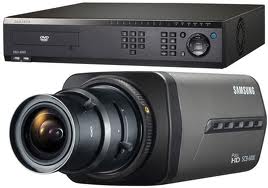
Samsung SRD 480D HD-sdi DVR

HD-SDI CCTV installed over coax means there is no loss of image data and zero latency when live images are viewed. The new SCB-6000 HD SDI camera and  SCD-6080 internal dome are therefore perfect for retail environments, especially where existing coax exists and the cost of using the network is prohibitive.

The Samsung HD-SDI four-channel SRD-480D DVR has also come onto the market this quarter. Samsung appreciate that there are viable options to IP HD and have released the new HD SDI CCTV range in order to offer a full HD CCTV solution and compete across all 3 disciplines. Real time images at 720p resolution across all channels can be achieved.

For HD SDI CCTV to work, no licence is required and existing coaxial cable runs of up to 100m can be used. If the distance required is over the 100m mark then distance can be extended when Samsung introduce in the near future the SPH-120R Repeater.

Samsung have made  their HD SDI range compatible with Samsung’s licence-free Net-i Viewer software. This means IP analogue and now HD SDI CCTV can all be controlled from the same remote software platform giving installers plenty of choice when upgrading existing multiple site installations.

The SCB-6000 HD SDI camera and SCD-6080 can deliver up to 5 times the resolution of a traditional analogue camera. Both cameras are fitted with noise reduction technology and can deliver 25 frames per second real time images and  both are true day/night with super dynamic features built in.

The Samsung HD-SDI CCTV range is supplied with full support services from Samsung Techwin Europe.


HD cctv over coax.


So what did the IMS research say about HD cctv over coax and how things will work out for this technology in 2012.
Well we have been following this closely over the last year and have seen some major developments over the last 12 months. Mainly on paper though. The promise of HD over cat5 and advances of the sort of distance and cable quality that can be used are being addressed mainly by the HD cctv alliance and this is to be commended. How have sales advanced though over the last 12 months and how will these progress over the next 12 months and beyond. Will it be HD-SDI or HD cctv?
It has to said that the idea of  HD cctv over coax is an attractive one , especially here in the UK. A combination of a mature, saturated market here and the desire for HD means that by retaining existing infrastructure but delivering better picture quality will mean that HD cctv over coax must get some market share, how much though will surely come down to price and interoperability.
As the IMS research points out the reason for a muted response for demand in 2011 was perhaps a lack of education. We know of several companies that are still to even hear of the technology and this news for those hoping for a rapid expansion for HD cctv over coax is disappointing.
However this said,  there does seem to be an unstoppable movement towards HD SDI DVR and HD SDI camera solutions. The IMS predicts a doubling in sales and we expect to see more players other than Everfocus starting to really push for market share in 2012. The Samsung SCB-6000 HD SDI camera will prove a popular choice and has begun to turn heads already,  also expect to see Samsung push their HD SDI DVR the SRD 480D as well this year.


Samsung SRD 480D HD-sdi DVR


So in summary for HD cctv over coax to really make an impact in 2012 the IMS say that Standardization is crucial ( the HD cctv alliance are currently striving for this). Storage costs must come down …well we have a problem with this early 2012 that’s for sure with hard drive shortages driving up the cost of storage. Finally market education is crucial. This is true however if this plug and play solution does become affordable the market will not take long to realize that its easier than IP and less “education” is required. The problem at the moment seems to be that getting the word around about how effective HD cctv over coax could really be here in the UK.
Finally we need to think about the chip manufacturers, will they come up trumps and produce  chip technology that makes HD cctv over coax an even more affordable solution?….lets wait and see.