Anything up to the first quarter of this year that was offering a viable HD CCTV solution has been synonymous with IP network systems. Now though, HD SDI CCTV is capturing the imagination of  CCTV installers. Samsung are at the forefront of the new HD SDI revolution and technology built into Samsung’s new HD-SDI cameras and HD SDI DVR allows installers  the option of real time Full HD images over coax cabling.
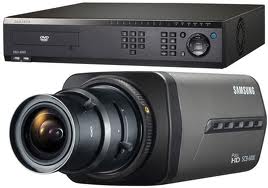
Samsung SRD 480D HD-sdi DVR

HD-SDI CCTV installed over coax means there is no loss of image data and zero latency when live images are viewed. The new SCB-6000 HD SDI camera and  SCD-6080 internal dome are therefore perfect for retail environments, especially where existing coax exists and the cost of using the network is prohibitive.

The Samsung HD-SDI four-channel SRD-480D DVR has also come onto the market this quarter. Samsung appreciate that there are viable options to IP HD and have released the new HD SDI CCTV range in order to offer a full HD CCTV solution and compete across all 3 disciplines. Real time images at 720p resolution across all channels can be achieved.

For HD SDI CCTV to work, no licence is required and existing coaxial cable runs of up to 100m can be used. If the distance required is over the 100m mark then distance can be extended when Samsung introduce in the near future the SPH-120R Repeater.

Samsung have made  their HD SDI range compatible with Samsung’s licence-free Net-i Viewer software. This means IP analogue and now HD SDI CCTV can all be controlled from the same remote software platform giving installers plenty of choice when upgrading existing multiple site installations.

The SCB-6000 HD SDI camera and SCD-6080 can deliver up to 5 times the resolution of a traditional analogue camera. Both cameras are fitted with noise reduction technology and can deliver 25 frames per second real time images and  both are true day/night with super dynamic features built in.

The Samsung HD-SDI CCTV range is supplied with full support services from Samsung Techwin Europe.
 

CCTV lighting  has never been as important as it is today. With the growth of HD SDI CCTV and mega pixel IP cameras it is a well know fact that these cameras perform much worse in low light conditions than traditional analogue cameras. In the past CCTV lighting has been traditionally done using either IR bulbs or halogen lighting. This type of lighting is expensive, with halogen in particular it is now widely accepted across the industry that this polluting,  inefficient lighting method is being rigorously phased out. New more efficient CCTV lighting in the form of IR and white light illuminators are now available and as LED technology gets better and better these lights are definitely the way forward.

sirius CCTV lighting solution

If you want good colour images at night then the white light illuminator is what you should chose. You can expect  the CCTV lighting illuminator to produce around 2700 lumens and be IP67 rated. The best thing about led lighting though is reliability. A life of 10 years or more is expected.

So why do we need lighting with cameras? CCTV lighting has always been a subject that gets overlooked but most crime occurs during the hours of darkness and we know all cameras need at least some light to produce an image. It is however the case that background lighting such as street light or even moonlight will not be enough for mega pixel cameras or HD SDI CCTV. It is also the case that good lighting will save space on your hard drive as background interference often increases the memory consumed on your hard drive. So better CCTV lighting reduces storage costs.

So what is the price of an illuminator compared to a halogen? Well right now price wise there is no comparison. While a 500 watt halogen can be purchased for as little as £5 an illuminator that is going to give the same sort of light spread will be well over £170 and very often more. This is hampering the change over of CCTV lighting from old to new technology. However the end user must be educated in the the TCO of an illunminator and the benefits of upgrading his CCTV lighting. While a halogen light might do you for a year without burning out , it wont last too much longer on average. Then it will draw 5 times more energy, this can be costly when having to pay the electricity bill. You must also consider access to the light for maintenance, a cherry picker these days is going to set you back at least £250 for the day so that halogen is far more expensive than you think. Finally if you are upgrading to HD SDI CCTV or a mega pixel IP camera then the extra money you have paid for quality images will be wasted as night time recordings will be disappointing.

So who are the main players well Iluminar and Sirius are popular brands and rival Raytec on price. All these CCTV lighting solutions are trusted brands and have a build quality that will ensure longevity in the field. It must also be noted that CCTV lighting can only become cheaper as led technology improves and more demand means more choice and competition.

So for crisp clear colour images from your HD SDI CCTV system at night go green with a white light illuminator and the sensible way forward for CCTV lighting.

HD SDI CCTV is going to be one of the main talking points at IFSEC this year. Many companies are now bringing out their HD SDI offerings in time for this years exhibition. Perhaps the most interesting thing from installers point of view is going to be the question why install HD CCTV rather than IP HD. Many CCTV companies have struggled to make the shift from Analog to IP and HD SDI gives them a solution that has not been available commercially until this year. HD SDI CCTV has no latency and the images are of excellent quality. There will be lots of comparisons this year of Analog images verses HD SDI but there is really no contest. High def images are the way forward for the CCTV industry and HD SDI is what many installers have been looking for for a long time now.

Installation is simple , either use the existing coax or alternatively run new coaxial cables just as would have been the case with a standard analog CCTV system. Many have questioned the flexibility of CCTV over coax but in essence most HD SDI DVR s have the ability to network and be accessed remotely via mobile devices.

HD SDI cameras do vary in performance and the HDcctv alliance has made great steps in making manufacturers cameras and HD SDI dvr s compatible. This will push the technology to bigger and better things and mean HD SDI technology will rival IP HD solutions for the market share. It must be stressed that HD SDI CCTV and IP both have there place. For new build and large integrated projects IP will still be the preferred option but the bulk of existing CCTV that has traditional RG59 coaxial infrastructure HD SDI offers a simple upgrade path that will find favour with CCTV installers and end users alike.

So this is the big year for HD SDI CCTV and with HD SDI technology improving by the day it will be interesting to see where we are the same time next year

HD SDI CCTV, the broadcast HD technology that has recently been causing much discussion in the  CCTV industry has started to see some recognised names bringing out products in Q1 2012. Samsung,Videcon, Grundig and Vista have all released products onto the market that is starting to recognise the importance of  HD SDI CCTV. Unlike IP CCTV the existing coax infrastructure can be used , no new cabling is required to upgrade from analogue to HD SDI CCTV and this is proving attractive to installers. The UK is abundant in legacy coax especially in small to medium sized premises , this suits upgrade to HD SDI CCTV perfectly. Now as technology advances customers are asking for HD and they want to pay as little as possible for it. Many smaller to medium sized outfits do not boast large IT networks or have a requirement for IP systems but they do have CCTV with between 4 and 8 cameras on site.  By using HD SDI CCTV we can replace these cameras and bring  high quality HD images to the end user without a complete redesign involved to upgrade to IP.

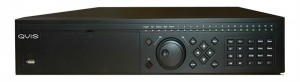
HD SDI DVR
HD SDI DVR

So have the likes of Samsung,  Videcon and Grundig made the right decision by trying to bring HD SDI CCTV to the mainstream CCTV market in the UK? Having seen seen some of the images that are being produced you would have to say yes. True 1080P images with no latency are impressive and compared to some analogue systems out there the quality upgrade is brilliant.  HD SDI cameras and HD SDI DVR s will be on show at IFSEC this year as the industry decides if HD SDI CCTV is really going to be effective and if it can compete with increasingly cheaper IP HD solutions. The other question still being asked is will it be better to sell a hybrid DVR that is able to record both HD SDI cameras and analogue cameras as well?  A partial upgrade may be preferable rather than upgrade the whole system to HD. Targeted areas for HD SDI cameras could prove the way forward.


So what are the major benefits of HD SDI CCTV.  Well it really is the simplicity of the installation and clear sharpe images as well as the ability to zoom in on events without the loss of clarity, these are the main factors. In addition there is no need to re-train engineers and re use of legacy cable keeps costs down. It’s  just plug and play. HD SDI CCTV has always been a goal within the CCTV industry. Now  CCTV salesmen have a product that works and brings genuine benefits to the end user at justifiable cost. Having seen  the HD SDI CCTV images and used an HD SDI DVR its safe to say customers will be happy with what they get, unlike some analogue systems out there. It should be mentioned that for low light scenarios IR is crucial in order to gain acceptable images.

As for functionality HD SDI CCTV is very flexible including the facility of remote connectivity. However we now have a zoom facility that can give us more detail post event.

So HD SDI CCTV as a solution has arrived and now we have real input into the market place from recognised names, it will be interesting to watch the growth of  HD SDI CCTV and monitor if it helps produce more convictions and reduce crime as a result.


Grundig HD-SDI CCTV range.


Grundig has become the latest big name to embrace HD-SDI technology. They have released their new range of HD-SDI cameras, HD-SDI domes and HD-SDI DVR’s.
Grundig the German electronics manufacturer are claiming that HD-SDI CCTV will prove a major break through in the security industry. Now we have been advocating this for sometime, however as each day passes more of the larger names in the security industry are showing their hand with new HD-SDI CCTV equipment being released into the marketplace.

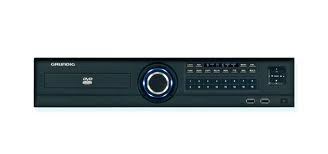
HD SDI DVR from Grundig
Grundig have stated in their latest press release “HD-SDI CCTV is a major breakthrough in the security industry. It enables the transmission of uncompressed digital video at a higher quality than IP, yet uses the same simple installation method as analogue coaxial cable. It also does not require expert IT support”.
Grundig’s senior product manager, Andreas Kronwald, explains: “Grundig’s HD-SDI products operate at 1080p progressive scan, 1980 x 1080 pixel resolution and 50 / 60 fps. This compares to D1 resolution at 720 x 576 pixels and IP megapixel cameras at 1280 x 1024 pixels. The recorders support 120 fps and offer up to a massive 64 TB of storage. Unlike IP CCTV, HD-SDI uses no compression at all, so image quality is optimized. It even enables installers to offer a digital upgrade to analogue systems, re-using the existing coaxial cable infrastructure to save money”.

Well  we need to see what price Grundig can market their HD SDI CCTV product for , however the competition is hotting up and prices will fall as a result.
Grundig’s spokesman continued “HD-SDI is presented in 16:9, widescreen format, meaning no black bars appear on monitors. Transmission distances are currently 100m and similar to IP. However, developments in SDI-specific, fibre optic transmission systems are extending transmission distances to many kilometres”.
Grundig have made clear that an HD-SDI CCTV system can still be connected to an IP network enabling all the features you could expect from a standard DVR that was remotely monitored. Grundig’s approach is to emphasise to end users the ease of installation and they claim that. “HD-SDI a CCTV not IP, with limited external access. It is intrinsically safe, far simpler to protect, ideal for installers and very effective in security applications”.
This entrance into the Market place from Grundig comes hot on the heals of the Samsung SRD480D and its HD SDI camera the SCB-6000 all very encouraging for the advancement of HD SDI CCTV as a technology that could soon bring HD to the smaller CCTV installer and their customers.