Viewing some HD SDI CCTV images the other day from a new Calsys HD SDI DVR and camera set up, it raised a question amongst my colleagues as to why, if you could have such clear precise pictures from HD SDI 1080p cameras, would you ever need anything more? HD is HD is it not? Do we need more resolution for a commercial CCTV system?

5,10,even 16 megapixel cameras are available, it has even been mooted that a gigapixel camera is now out there somewhere, but in the real world , in a proper sales environment, can the extra pixels be justified?

Of course the answer is yes – there will always be a situation that demands the very highest quality image and the maximum amount of performance from a fixed lens that in turn can then be zoomed into without loss of definition.

However, we live in the world of needing sales every week to survive. We need a concept that can give HD images as the general public perceive them and supply into applications such as retail, reception areas, small yards, petrol stations, garden centres, boat yards, transport depots and so on.

In the real world people now want HDCCTV. It is a proven concept and one that is desirable rather than a grudge purchase. Customers, however, have limitations on budgets and there are far more corner shops, petrol stations and garden centres out there than there are multimillion pound football stadiums or airports that of course may well benefit from a 16MP camera and an IP solution.

In the UK there are also many thousands of legacy analogue CCTV systems all wired in RG59 coax and all screaming out for one or two HD cameras to compliment their analogue CCTV system. So is the Hybrid HD SDI DVR going to provide a solution here in the UK amongst a public who are drooling over the quality of HD TV? A public that are also highly aware that any purchase must fall within stringent budgets, we are after all a nation up to our necks in debt!

The answer is an unequivocal yes. So HDCCTV fits the UK perfectly, as for the rest of the world ,who knows. Actually who cares…we live here and sell here so will recommend what will suit our market place. In the UK that is an HDCCTV solution.
Looking out the window its raining again. Not only that but its starting to get dark its only 7 o’clock and its still August. A dank, dark and dreary day its started to get me thinking about external lighting.

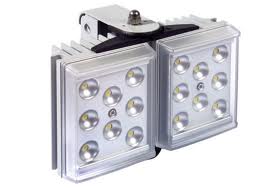
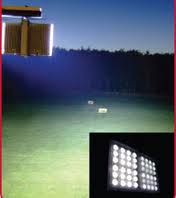
Raytec LED lighting

Involved in the day to day running of a CCTV company it reminded me that within a couple of weeks the service calls are all going to start pouring in. Whats more they are all going to say the same thing. “Lights not working. Bulbs blown,Lights burnt out, Lights won’t work automatically” and so the list will go on. It’s a symptom of the fact that the lights that give the CCTV systems clarity at night have probably been blown out all summer but it just happens that everyone seems to notice their problems at the same time. ie at 6 o’clock mid September when they all head home and set their systems. All of a sudden they notice they can’t see where they are going. Some even realize that their cameras can’t see where they are going either and so the influx of service calls begins.

The problem of course is that most CCTV systems out there still use halogen lighting systems, generally tripped by a PIR to bring lights on only when needed. Now these lights are cheap to buy and relatively cheap to install, but do they last …NO! Its actually not even the installers fault. Try buying a decent halogen light. The home DIY market has ensured that any light costing more than £10 and no one will pay for it. Its a shame because some years ago tungsten halogen lighting was made to a high standard and lights and bulbs would last forever. Unfortunately  these good manufacturers were put out of business by cheap imports.

So what is the solution? Well its here and it comes in the form of high intensity LED lighting. Raytec immediately spring to mind as the market leaders. Their lights are cleverly designed and reliable. A huge marketing campaign has ensured that Raytec are number one when it comes to CCTV and to their credit they are also branching into street lighting. Ergonomic design ensures they look good and they give fantastic results.In addition Rytec led lighting gives great light spread and reduced costs once installed. The only issue is the cost of the initial unit, however in the case of Raytec we believe you actually get what you pay for.

So back to CCTV and surely lighting is becoming less important with more sophisticated cameras, right?  Well quite the opposite. Megapixel IP cameras and CMOS chips in HDCCTV cameras perform much less efficiently in the dark than analogue CCTV cameras. To this end as the marketplace swings towards HDCCTV,  lighting will actually become much more important. Now we suspect that it will not be too long before the market place starts to see lots of cheap LED lighting being used. The shift to HDCCTV will demand this and we think it will be beneficial to end users as there night time images will improve as a result.

Raytec led lighting

So maybe next year as more reliable led lighting starts to get installed across the UK and we start to see HDCCTV images with crystal clear clarity, we wont get quite so many service calls…………we live in hope!

An excellent article in July’s edition of PSI Magazine asks the question” what is the current state of IP CCTV as it stands in the CCTV market place today?” The opening statement of the article certainly confirms what many think. With input from respected professionals such as central station managers Colin Walters and Steve Kimber it asks how IP CCTV is integrating with the central stations and the quality of the monitoring as a result. The article also touches on HD SDI CCTV with great insight from Todd Rockoff and asks where this technology sits within the CCTV industry and where HD SDI CCTV will be focusing in the future. ONVIF and how it is playing an important role in ensuring IP CCTV does get its fair share of uptake is also covered well within the piece.

The whole article is fair and balanced and really does reflect how most CCTV professionals feel IP CCTV is developing within the security industry.

So  for a great read turn to page 22 once you hit the link and look for the article headed “AIR OF MYSTERY investigating the current state of IP CCTV”

Yes….. well the big idea is  that HDCCTV solutions will transform the CCTV industry. Where IP has failed, HDCCTV will succeed. The reason is simple. IP is the domain of the IT world. HD CCTV is the domain of the security world and that’s because its simple. More than that its a massive improvement on what we have had to endure with analogue CCTV over the last 30 years. The dream of CCTV and why it evolved in the first place was to read number plates, to see faces and identify criminals. The effect was supposed to deter crime. With HDCCTV this is now actually possible but with HDCCTV we still protect existing investment in the coax infrastructure. Relatively cheap but ultimately effective……….that’s why it will succeed……..

HDCCTV

Plenty of Pro’s…..what about the Con’s??

1: cable distance of 100m or so………so what, IP is 90m and HDCCTV can be repeated with repeaters

2: maximum 2MP…….again, kind of so what – majority of IP sales are in and around 2MP and any higher might often be wasted or not utilised…..more bandwidth and bigger file sizes and just exactly how far do you need to post-zoom!!!

3: lack of suppliers – ok, we concede on this, there isn’t a massive choice, but its improving daily

4: only uses certain coax – again, a bit of a myth – sure, the better the quality the longer the run, but HDCCTV will work on pretty much any reasonable coax cable

The fact is, it is difficult to really count the Con’s….. HDCCTV is a credible upgrade solution to existing analogue systems and is far easier to implement than IP due to it’s ability to utilise existing cable infrastructures.

The recorders appear to be more expensive than both analogue and even IP competitors, but I wonder how much of that is ‘new technology’ price premium??? Wth greater acceptance and higher sales volumes, those prices surely must tumble?

And maybe the labour/cable savings outweigh the extra prices of the recorders??

The cameras seem reasonable, certainly on CMOS anyway, and again, prices are usually dictated by volumes…

So, it’s very simple, to drive price down then acceptance and use must rise….. And with so many Pro’s and very few Con’s then it surely is only a matter of time!