HD CCTV is being touted as the answer to every installers dream when it comes to upgrading and enhancing existing analog CCTV systems. But how does it work and what are the shortfalls if any? HD SDI CCTV cameras can produce images that can achieve 720p and 1080p video at a full 30 frames per second. Add to this the fact that upon delivery there is  no latency or use of compression of the image and you start to see the attraction of this technology.

To enable installers however to reach a balanced view there is a need to ask if  HD CCTV can replace or even supersede IP based HD CCTV cameras?

Many in the CCTV industry have asked if IP solutions will be blown away by this new technology. Well firstly we need to consider that 80% of the UK market place is still analog CCTV solutions and HD CCTV in the form of  HD SDI is definitely at an advantage to take the share of upgrades. but is it flexible enough when it comes to integration and will the advance to 10 16 or even 20 megapixel IP cameras mean that HD CCTV will be dropped in favour of IP?

HDcctv benefits


Firstly we need to understand exactly how HD CCTV works as opposed to IP HD cameras.  HD CCTV uses coax and has been developed on the back of HDTV and the technology behind the pictures we see on our TV sets today. It is not dissimilar from a standard analog CCTV system and uses coax to carry images of up to 2.1 megapixels from the camera to the DVR. It does not use cat 5 or existing IT networks this means there is no compression required and as a result no latency.

The primary benefit  to CCTV integrators is the ease of installation. Because HD CCTV can use existing coax or is wired as a point to point system, any engineer with basic knowledge of CCTV can install it. No IP addresses, IT managers interfering or network issues to contend with. Quite simply its plug and play. This makes installation simple, uncomplicated and best of all cheaper than many IP based systems. No new cabling makes a retro fit installation far more commercially attractive than an IP solution.

The ability of HD CCTV to re-use the same cabling infrastructure as most traditional analog systems is though the main selling point together with images that will impress even the biggest sceptics of HD SDI CCTV. One of the largest costs in any analog system conversion is the changes to the cabling infrastructure. This technology allows organizations an easy, economical way to upgrade a legacy analog system to achieve the benefits of megapixel cameras.


One of the main challenges to HD CCTV and its uptake in the UK has been the lack of companies who are able to offer a cost effective HD SDI DVR this however has most definitely been overcome. IFSEC 2011 was the tipping point with HD CCTV systems being the star of the show. It was almost like the consumers had forgotten about IP CCTV. Still more competition is required and hybrid HD SDI DVR’s seem the obvious path to upgrade.

One barrier to HD CCTV is that the resolution capabilities IP are far greater. HD SDI cameras can produce the max resolution being 2.1 megapixels. IP cameras have as much as 5 times that resolution and it is only bandwidth limitations that stop this being expanded further. However many years in the industry have taught us that anything much higher than 2 megapixels starts to become cost prohibitive and even though sometimes higher resolution might be preferable it is often not practical. When viewed 2 megapixels is generally accepted as quite sufficient especially when compared to the previous best offerings of analogue CCTV.

Of course IP will always have its needs and the larger the organization the more likely that IP will be the preferred solution. This however still leaves vast amounts of the market place open to HD CCTV and gives the wider population the access to HD that has previously proved too expensive.

So the question was is HD CCTV the answer to everything, well no its not but it is certainly going to provide a viable alternative to IP and one that will prove to inevitably be the preferred option to current CCTV installers and their huge user database.
 

HD CCTV is the new technology that lets you view true uncompressed HD CCTV over coax. The benefit of this is obvious. There are literally millions of CCTV systems currently in the UK that can be upgraded and enhanced with HD CCTV technology. HD SDI cameras and HD SDI DVR’s are simply added to an existing analogue CCTV system . All of a sudden we can see a tired old analogue system transformed to give HD images and recordings. The CCTV industry has been blighted over the years with poor cameras giving too wide images with inadequate resolution. Quite simply this means that whenever an incident occurs the end user is faced with recorded video that is next to useless. Now though this infrastructure investment does not have to be wasted. By using existing coax we simply upgrade the “ends” to give true HD quality to an existing analogue system. So to upgrade and enhance your existing CCTV system to HD CCTV cameras,  look no further than HD CCTV solutions  for the perfect picture .


IFSEC is now just around the corner. Over the next few days we will be reviewing who will be exhibiting, their product ranges and what  to look out for if you are attending the show this year. IFSEC 2012 will be introducing new technology zones  and some of the most interesting products to look out for this year will be HD CCTV solutions. HD IP , HD CCTV and HD-SDI CCTV and HD SDI camera products will be on display all emphasising the push towards HD CCTV as the preferred option of upgrade for end users. We have seen prices tumbling this year bringing all HD products into the realistic grasp of normal business out there. So this will be the year of the HD CCTV and  HD SDI cameras and recording solutions?

Any exhibitors who are at IFSEC 2012 and would like us to run a product review on this site are welcome to contact us. So the run up to the show begins and we will watch with interest to see who’s products and what technology comes out on top this year .

HD SDI CCTV, HD CCTV DVR, HD SDI DVR

HD SDI CCTV, the broadcast HD technology that has recently been causing much discussion in the  CCTV industry has started to see some recognised names bringing out products in Q1 2012. Samsung,Videcon, Grundig and Vista have all released products onto the market that is starting to recognise the importance of  HD SDI CCTV. Unlike IP CCTV the existing coax infrastructure can be used , no new cabling is required to upgrade from analogue to HD SDI CCTV and this is proving attractive to installers. The UK is abundant in legacy coax especially in small to medium sized premises , this suits upgrade to HD SDI CCTV perfectly. Now as technology advances customers are asking for HD and they want to pay as little as possible for it. Many smaller to medium sized outfits do not boast large IT networks or have a requirement for IP systems but they do have CCTV with between 4 and 8 cameras on site.  By using HD SDI CCTV we can replace these cameras and bring  high quality HD images to the end user without a complete redesign involved to upgrade to IP.

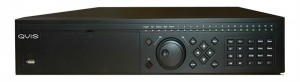
HD SDI DVR
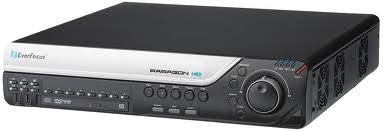
HD SDI DVR

So have the likes of Samsung,  Videcon and Grundig made the right decision by trying to bring HD SDI CCTV to the mainstream CCTV market in the UK? Having seen seen some of the images that are being produced you would have to say yes. True 1080P images with no latency are impressive and compared to some analogue systems out there the quality upgrade is brilliant.  HD SDI cameras and HD SDI DVR s will be on show at IFSEC this year as the industry decides if HD SDI CCTV is really going to be effective and if it can compete with increasingly cheaper IP HD solutions. The other question still being asked is will it be better to sell a hybrid DVR that is able to record both HD SDI cameras and analogue cameras as well?  A partial upgrade may be preferable rather than upgrade the whole system to HD. Targeted areas for HD SDI cameras could prove the way forward.


So what are the major benefits of HD SDI CCTV.  Well it really is the simplicity of the installation and clear sharpe images as well as the ability to zoom in on events without the loss of clarity, these are the main factors. In addition there is no need to re-train engineers and re use of legacy cable keeps costs down. It’s  just plug and play. HD SDI CCTV has always been a goal within the CCTV industry. Now  CCTV salesmen have a product that works and brings genuine benefits to the end user at justifiable cost. Having seen  the HD SDI CCTV images and used an HD SDI DVR its safe to say customers will be happy with what they get, unlike some analogue systems out there. It should be mentioned that for low light scenarios IR is crucial in order to gain acceptable images.

As for functionality HD SDI CCTV is very flexible including the facility of remote connectivity. However we now have a zoom facility that can give us more detail post event.

So HD SDI CCTV as a solution has arrived and now we have real input into the market place from recognised names, it will be interesting to watch the growth of  HD SDI CCTV and monitor if it helps produce more convictions and reduce crime as a result.


Police were able to go into such fine detail using HD CCTV they were actually able to literally see the whites of the criminals eyes. As more convictions are held up after the London riots using CCTV evidence. This is by far the best example yet.


http://uk.news.yahoo.com/cctv-snares-cross-eyed-arsonist-172421515.html

“Despite covering his face, officers combing through CCTV footage spotted Burls, of Purdon House, Peckham, because of his distinctive crossed eyes.

The 23-year-old originally denied the offence, but was jailed for a total of eight years at Inner London Crown Court after pleading guilty on January 30 to two counts of arson being reckless as to whether life was endangered, and one of burglary with intent to steal at Iceland in Rye Lane, a court official confirmed.”