Samsung have uploaded footage to You tube indicating that they are about to start to look further into the opportunities that are presenting themselves through HD SDI CCTV.

This move by Samsung is Quite a step forward for HD SDI technology as a viable product  and Samsung are one of the first of the “big boys” to recognise that this may be the future of the CCTV industry. IP cameras are still to gain a significant foothold especially in the UK and installers are looking for new and different ways forward.

HD over coax has to be the simplest way to maintain existing cable infrastructure but at the same time offer superb quality for the end user.

The likes of Everfocus and CalSys already have HD SDI DVR’s and cameras out there and they have proven that this technology works and is very effective. What is significant is that if Samsung do invest seriously then the this would force others to look into HD SDI to and the TCO of this technology would become significantly lower as a result ,offering real competition to IP  cameras and NVR’s.

We look forward to Samsung’s approach for the rest of 2011 and into 2012 regarding HD CCTV solutions.
Many years ago it was suggested that HD images could be transmitted over an IP network and reviewed and recorded using a PC. When this was first suggested and prototype cameras and NVRs produced so the marketeers could do their stuff, many CCTV professionals found this idea laughable. Most CCTV companies ignored the technology citing the fact that a company IT network would be overwhelmed with data and would simply crash as a result. They suggested no corporate company or any IT manager in fact would ever let these images on their network and suggested the technology was dead in the water before it even got off the ground.

HDCCTV V IPCCTV
IPCCTV was dead in the water according some before it even had a chance

Well, as we now know, although many of these networks have remained unchanged and the topology and infrastructure is as it always was, time has moved on and compression techniques employed by IP CCTV manufacturers have improved dramatically. Network switches have come on leaps and bounds and POE and codecs have made IP CCTV commercially viable. In addition huge PR campaigns by some of the large IP camera manufacturers have meant that an idea previously conceived as unworkable is now widely accepted as the way forward and the only feasible upgrade path for old defunked analogue CCTV systems.

Fast forward to 2009 HDCCTV is now available.

Fast forward to 2009 and a new technology is being talked about . This time it is suggested that HD CCTV images are to be transmitted using SDI interfaces over existing RG59 coax. Many CCTV professionals find this idea laughable. They suggest that this technology will never be able to become commercially viable and existing coax would never be able to cope with demands placed on it by HD image transmission. They have said HDCCTV is dead in the water and will not get off the ground.

However just two years later (2011), a blink off the eye in terms of development, HDCCTV manufacturers are now exhibiting their HD SDI DVR’s and cameras at such high profile shows as IFSEC in the UK and ASIS in the USA. It could be argued that the stand that received most attention at IFSEC this year was the Everfocus stand as crowds gathered round to watch a demonstration that many had predicted two years earlier as impossible. Many forums still mock the technology, some we have to say in a rude and quite unprofessional way and yet HDCCTV technology continues to push the boundaries. It has now been mooted that HDCCTV can be transmitted over UTP cable, now this really would set the cat among the pigeons if proven to be true. In addition every week claims of greater distances are being achieved over coax with better results and better HDCCTV images. Add to this more and more companies committing huge sums to research and development and the” third way” really is beginning to gain traction in the world of CCTV.

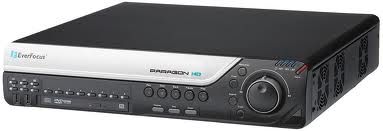
HD SDI DVR

Big guns are now piling in to HD CCTV production. Why would Everfocus, VISTA, CalSys and Dahua to name a few be manufacturing HDCCTV products? Also why would big distributors such as Norbain and 360 Vision Technology be making noises about introducing HD SDI DVR’s into the UK before Christmas if they were not happy that HDCCTV will take off? After all it takes huge commitment and large sums of money invested to ensure these products are able to perform and then bring them to market at a price that will sell.

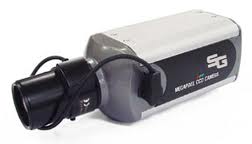
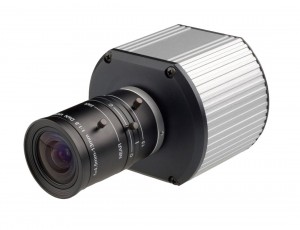
HDCCTV SDI Camera

Once we see the TCO of HDCCTV become more competitive then many UK customers and CCTV manufacturers will start to consider their options. Do they dive into the HDCCTV market or go with IPCCTV? Perhaps they may wish for a hybrid solution? Many HDCCTV DVR manufactureres are expecting a mixture of analogue and HD SDI cameras will probably be the way forward here in the UK. We are sure HDCCTV, especially when supported by the HDCCTV alliance will make the technical strides necesary to ensure that any issues currently thrown back at them are overcome. Its going to be a very interesting year in the battle between HDCCTV and IPCCTV……………………that’s for sure.

Viewing some HD SDI CCTV images the other day from a new Calsys HD SDI DVR and camera set up, it raised a question amongst my colleagues as to why, if you could have such clear precise pictures from HD SDI 1080p cameras, would you ever need anything more? HD is HD is it not? Do we need more resolution for a commercial CCTV system?

5,10,even 16 megapixel cameras are available, it has even been mooted that a gigapixel camera is now out there somewhere, but in the real world , in a proper sales environment, can the extra pixels be justified?

Of course the answer is yes – there will always be a situation that demands the very highest quality image and the maximum amount of performance from a fixed lens that in turn can then be zoomed into without loss of definition.

However, we live in the world of needing sales every week to survive. We need a concept that can give HD images as the general public perceive them and supply into applications such as retail, reception areas, small yards, petrol stations, garden centres, boat yards, transport depots and so on.

In the real world people now want HDCCTV. It is a proven concept and one that is desirable rather than a grudge purchase. Customers, however, have limitations on budgets and there are far more corner shops, petrol stations and garden centres out there than there are multimillion pound football stadiums or airports that of course may well benefit from a 16MP camera and an IP solution.

In the UK there are also many thousands of legacy analogue CCTV systems all wired in RG59 coax and all screaming out for one or two HD cameras to compliment their analogue CCTV system. So is the Hybrid HD SDI DVR going to provide a solution here in the UK amongst a public who are drooling over the quality of HD TV? A public that are also highly aware that any purchase must fall within stringent budgets, we are after all a nation up to our necks in debt!

The answer is an unequivocal yes. So HDCCTV fits the UK perfectly, as for the rest of the world ,who knows. Actually who cares…we live here and sell here so will recommend what will suit our market place. In the UK that is an HDCCTV solution.

Looking out the window its raining again. Not only that but its starting to get dark its only 7 o’clock and its still August. A dank, dark and dreary day its started to get me thinking about external lighting.

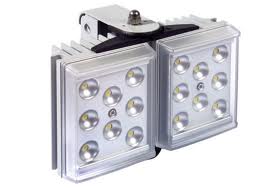
Raytec LED lighting

Involved in the day to day running of a CCTV company it reminded me that within a couple of weeks the service calls are all going to start pouring in. Whats more they are all going to say the same thing. “Lights not working. Bulbs blown,Lights burnt out, Lights won’t work automatically” and so the list will go on. It’s a symptom of the fact that the lights that give the CCTV systems clarity at night have probably been blown out all summer but it just happens that everyone seems to notice their problems at the same time. ie at 6 o’clock mid September when they all head home and set their systems. All of a sudden they notice they can’t see where they are going. Some even realize that their cameras can’t see where they are going either and so the influx of service calls begins.

The problem of course is that most CCTV systems out there still use halogen lighting systems, generally tripped by a PIR to bring lights on only when needed. Now these lights are cheap to buy and relatively cheap to install, but do they last …NO! Its actually not even the installers fault. Try buying a decent halogen light. The home DIY market has ensured that any light costing more than £10 and no one will pay for it. Its a shame because some years ago tungsten halogen lighting was made to a high standard and lights and bulbs would last forever. Unfortunately  these good manufacturers were put out of business by cheap imports.

So what is the solution? Well its here and it comes in the form of high intensity LED lighting. Raytec immediately spring to mind as the market leaders. Their lights are cleverly designed and reliable. A huge marketing campaign has ensured that Raytec are number one when it comes to CCTV and to their credit they are also branching into street lighting. Ergonomic design ensures they look good and they give fantastic results.In addition Rytec led lighting gives great light spread and reduced costs once installed. The only issue is the cost of the initial unit, however in the case of Raytec we believe you actually get what you pay for.

So back to CCTV and surely lighting is becoming less important with more sophisticated cameras, right?  Well quite the opposite. Megapixel IP cameras and CMOS chips in HDCCTV cameras perform much less efficiently in the dark than analogue CCTV cameras. To this end as the marketplace swings towards HDCCTV,  lighting will actually become much more important. Now we suspect that it will not be too long before the market place starts to see lots of cheap LED lighting being used. The shift to HDCCTV will demand this and we think it will be beneficial to end users as there night time images will improve as a result.

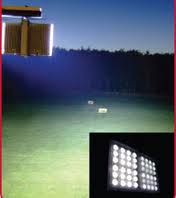
Raytec led lighting

So maybe next year as more reliable led lighting starts to get installed across the UK and we start to see HDCCTV images with crystal clear clarity, we wont get quite so many service calls…………we live in hope!

Riots across the UK are an absolute disgrace.

CCTV images of riots
Can we get a conviction from this kind of quality image?

The vast majority of the citizens of this country feel total repulsion for these rioters and what they are doing to the law abiding shop keepers and people of this country. But what of the aftermath? How are these youths going to be bought to justice? Well CCTV of course! But we have a problem. Most youths are aware that CCTV cameras are everywhere and are suitably covered up concealing their faces. Also how many systems actually comply to the point where they could be used as evidence in a court of law. Finally lets be honest, is analogue CCTV really good enough to convict anyone even if they don’t wear hoodies? The answer is of course in most cases no. A sad indictment of CCTV being installed by non professional CCTV companies, electricians or  DIY CCTV systems. In effect CCTV on the cheap!!!.

UK riots and CCTV images.

When will people learn that they have to install CCTV properly to actually get results when they really need them. This of course does not address the issue of analogue CCTV images and the lack of quality this this provides for evidential purposes. The answer of course is HDCCTV whether it be IP megapixel cameras or HD SDI CCTV. Now, this may not see faces of hooded youths but it can identify the logos and distinctive markings on their clothing. It can also easily see the stolen goods in their hands and match the two giving strong evidence to present in court.We must also ensure all CCTV systems comply with the data protection act and watermarking  of the video is in place. Then and only then can we get a conviction.

We must address poor images and badly installed CCTV. We can improve quality and we must ensure all new CCTV is installed to pre-qualified standards. Most of all we have to use new technology and wherever financially possible, use HDCCTV quality cameras and recorders.