HD Pro Cameras


Avigilon are about to Introduce their new line of HD Pro cameras. Avigilon claim that these cameras are the industry’s most powerful and they also claim these are the most innovative line of high-definition cameras that the have been manufactured to date.


The new HD Pro cameras are available in three different versions. This is the 8 MP, 12 MP and 16 MP resolutions. Each camera has been completely re-engineered on Avigilon’s next generation H4 platform and designed to deliver the ultimate combination of performance, processing power and bandwidth economy.

Avigilon have achieved this through the seamless integration with Avigilon Control Center by using Avigilon’s proprietary HDSM 2.0 technology. Avigilon’s HD Pro cameras also come with onboard storage capabilities, allowing for the storage of footage directly on the device using a standard SD card. This is another step forward in edge recording.

Avigilon have deployed their technology in many different places from stadiums and airports to large-scale critical infrastructure projects and Avigilon’s new HD Pro cameras continue to provide vast coverage with unparalleled image detail.

KEY FEATURES BENEFITS OF  THE NEW AVIGILON RANGE INCLUDE

8 MP, 12 MP and 16 MP resolutions.

Capture high-quality, detailed images over vast areas, while providing maximum coverage options.

H.264 Compression H.264 compression allows for maximum image quality while minimizing impact on bandwidth and network performance.

Focus and Iris Control of SLR Lenses.

Remote focus for ease of installation and operation.

Plug-and-Play No external power required.

Flexible lens options Compatible with both EF and EF-S mount lenses for the best possible optical quality.

Onboard storage SDHC and SDXC card compatability for storage of video footage directly on the device.

LightCatcher TM Technology Collects significantly more detail from a low light scene, to deliver higher quality colour images with far less noise than other low light cameras.


The H4 platform and HDSM 2.0 Engineered using H.264 compression technologies, Avigilon’s next-generation H4 platform allows for improved overall camera performance, including faster processing power, more efficient bandwidth management and superior image detail.

So how is this achieved?

Its quite simple, by harnessing the strength of Avigilon Control Center and the second generation of our patented High Definition Stream

Management technology (HDSM 2.0), our H4 platform intelligently and efficiently manages your HD data, letting you view and search through high-definition video easier than ever before, with fewer strains on network resources. The combination of these two revolutionary technologies results in Avigilon’s most powerful cameras yet, which means your system can maintain optimal performance while still getting unparalleled image detail.

Vast coverage. Superior detail.

The HD PRO series is built to accomodate the coverage of  large areas such as Stadiums, carparks and airports, Avigilon’s HD Pro camera series are the ultimate camera for providing full situational awareness combined with crystal clear detail when zoomed in. Monitor a full stadium and capture fan disruptions to comply with mandatory government regulations. Cover a full parking lot and identify number plates. Or cover the entire tarmac of an airport while still being able to distinguish plane numbers. Regardless of your coverage needs, Avigilon’s HD Pro cameras provide the power and detail you need to keep your environment safe and secure. If you need security, need to monitor public spaces, reduce false injury claims, control crowds and prevent theft then look no further than the Avigilon HD PRO camera range for unimaginable detail.

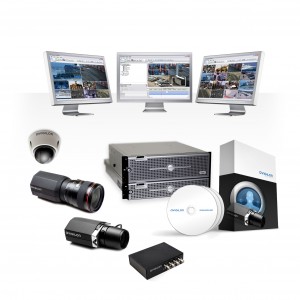
 

HD cctv can be carried over coax or across an IP network. The first option is great for CCTV upgrades to HD where you have an existing analogue system and want HD but do not wish to replace all your cable infrastructure. So could you install HD over coax yourself. Well, with the right guidance yes. After all you are just replacing ends and that’s what makes HD CCTV over coax such an attractive option for many.


The second route is HD IP perhaps this is a little more involved but there are  many IT professionals who would find designing and installing an HD CCTV camera system quite simple. The important point to consider is the initial design of the network is critical. It is also very important lighting is considered as well as the amount of cameras you will need once the system is at full capacity not what the system actually requires now. Each HD camera we add to a system will add a bit more pressure as to how the system as a whole will perform.


So firstly sit down and think where you want your HD CCTV system to be in 5 years’ time. Is the site/operation likely to expand ,if so build in suitable redundancy. Make sure the backbone of the system is up to spec. Sometimes fibre will be your only option. Use suitable switches anything substandard will affect the performance of the system and always ensure the NVR /software you choose can handle the cameras you need to install. ONVIF compliancy does not guarantee you can control or focus your cameras it just means you can see the image. So steer clear of too much mixing and matching of different manufacturers technology.


Finally the lighting. HD CCTV cameras are very light hungry. Much disappointment has greeted HD because no lighting consideration is given prior to an installation. IR illuminators form the main solution when designing an HD CCTV system however some manufacturers are now marketing high performance lowlight HD cameras as well HD cameras complete with IR illumination built in.


So is it easy to install a DIY HD CCTV system? Well the conclusion is that you will need some sort of experience with CCTV design but yes it can be done and with the help of sites such as HD CCTV solutions you can purchase the kit you need to ensure your system will operate to its full potential.


On the face of it when you compare HD CCTV product prices against analogue CCTV prices how can it be possible that HD CCTV can actually work out cheaper?. Well there are several factors we need to take into account when making this assumption. These range from power saving , better coverage supplied by HD, time saving on searches, false claims that can be dismissed, increased productivity and reduced crime.

An HD CCTV system brings many benefits over analogue and these in turn will bring an impressive ROI far quicker than anticipated in many cases.

megapixel cctv image

Below we list many of the factors that make HD CCTV cheaper compared to analogue.

1) If you are a large organization your CCTV system will often have grown with the businesses and this could well mean you have bank after bank of DVR’s, monitors, matrixes and associated power supplies piled up in your server room. This equipment will be drawing a large amount of current 24 hours a day, 7 days a week, 365 days a year. HD CCTV is scalable and this means you are no longer restricted to 16 way DVR after 16 way DVR each time you need more cameras. HD servers are able to handle hundreds of cameras each so the current draw for this one server will be significantly less. Add to this the fact that you will need less cameras to cover the same area and over time your saving on power consumption alone will go a long way to paying for your new HD CCTV system.

2) As we mentioned above you will need less cameras. A 16 MP camera for instance with the right software will do the same job as up to 50 analogue cameras. Instantly you can see the savings mounting up.

3) In many organizations one of the most stressful, costly and annoying drains on the business can be false claims from employees or customers. The NHS is a classic example of this. With traditional analogue cameras and recording methods information is often difficult to find and when it is found the picture quality often means proving a false claim is impossible. HD CCTV software makes searching for information so much easier. Information can be discovered in seconds not hours and once found the detail in the image will often prove a claim to be false thus saving tens of thousands of pounds in some cases.

4) Productivity is something that is at the heart of every organization. Improve this and you improve your profit. HD CCTV systems can identify areas of the business that can be costing you money far more easily than analogue solutions. Once identified the information can be used to put in place changes and then ensure these improved procedures are adhered to.

5) Crime reduction is key to maintaining profitability. Sadly many who would chose to steal from their employers have now identified the weakness of analogue CCTV and exploit this to their benefit. HD CCTV is a real eye opener for those who think CCTV has had its day. Once images are shown to a few the word spreads fast to many. This helps discourage those who think it may be worth the risk to take on CCTV thinking its not good enough to catch them. Rest assured HD CCTV certainly is.

Just a few reasons that HD CCTV can be cheaper than analogue but finally there is one further benefit. It does the job that you expect CCTV to do!


Benchmark are known as the best in the business when it comes to testing and reporting on CCTV and related products. Recently they tested the Claruis IR illuminator and we have re-posted their findings. Honest and to the point. It does however prove what robust products are produced within the Clarius range. Please read through the findings and order your HD CCTV lighting here at HD CCTV solutions.

“PROFESSIONAL TEST: CLARIUS IL-8100

Many years ago, infrared lighting for surveillance was the exclusive preserve of high risk sites. However, changes in manufacturing have resulted in costs falling, as well as maintenance needs being reduced. The result is cost-effective illumination for virtually all applications. The latest option is the Clarius range.

One of the most significant developments for video surveillance in recent years was arguably the introduction of surface mount LEDs. This development forced the cost of surveillance illuminators downwards, with the result that now, almost any application can benefit from true 24 hour video surveillance.

The subsequent growth in true day/night devices, coupled with affordable secondary illumination, has eradicated issues with around-the-clock surveillance, and that in itself is no small thing.

Whilst white light is still the preferred option for many (as colour detail is preserved), concerns about light pollution have seen the rise in use of infrared lighting, to the point where it is almost the first choice nowadays. As the majority of cameras are IR sensitive, there are no real barriers to utilising infrared illumination.

While the number of manufacturers offering infrared lighting has grown in recent years, demand for the products is still high, and HD CCTV solutions are a relatively new entrant to this area. The company offers the Clarius range of infrared illuminators.

Specification

Clarius is Latin for ‘more brightly’ … or it could be a reference to Apollo, who was God of light and the sun. Either way, it isn’t important to those seeking illumination.

The Clarius range is made up of short, medium, long and extra long range units, and also includes PoE options. Our test unit was the IL-­8100, a long range unit using traditional low power.

The illuminator is an 850 nanometre unit, which emits a red glow when in use. A more covert 940 nanometre variant is also available. Coverage is 100 x 50 degrees, with a total range of 48 metres.

The unit can be controlled via a telemetry input; it also has an integral photocell, with a photocell following contact to switch cameras to an appropriate mode as the illuminator turns on and off. The photocell is adjustable for sensitivity. The defaults allow the light to switch on at around 30 lux, and to switch off at around 70 lux. This differential is included to prevent the lamp flicking on and off during dawn and dusk periods, when light levels are at the switching threshold. The photocell can be disabled.

Power output can also be adjusted between 10 and 100 per cent. Both adjustments are via sideways-oriented potentiometers on the rear of the unit. There are no other adjustments. The illuminator is housed in an extruded aluminium housing, which is anodised with a black finish. The polycarbonate protective lens is billed as ‘vandal-proof’, which is a bold claim. The unit incorporates an integral mounting bracket.

The lens of the Clarius illuminator is treated with what the manufacturer refers to as a ClearLite coating. This is a self-cleaning coating, which is also claimed to make the surface of the polycarbonate cover more scratch-resistant. During the test we did replace a unit that had been outside for nearly five years with the new unit. Despite being in an exposed place, the lens of the older lamp wasn’t particularly dirty or scratched. Still, the coating is there as standard.

Connections to the unit are simple. The illuminator is fitted with a three metre six-core cable. The connections are for power input (12-32V DC or 24 AC), telemetry input and photocell following contact. The cable is pre-connected at the illuminator, eradicating the need for a specialist connection. Power consumption is stated as 39W.

The only other element of the illuminator is a pressure relief valve. This is a standard feature on most illuminators and doesn’t need any interaction.

Build quality is good, and the lamp is supplied with a brief but complete manual.

Performance

Once up and running, the Clarius IL-8100 worked as expected. We tried the unit using the photocell before shifting to our preferred method of operation using telemetry. A point to note is that some illuminators mount the photocell on the back of the unit. If mounted under roof eaves or in a restricted space, this can cause the unit to switch on well before it is actually needed. The Clarius unit has the photocell mounted on the top of the housing, which mostly eliminates mounting issues.

Switching using the photocell was consistent, and we didn’t experience any problems with the unit flickering during dusk and dawn periods. The degree of adjustment isn’t that wide, and whilst the unit switched on a tad early, there wasn’t that much in it.

That the cable is pre-connected is a bonus, as some units are supplied with specialist sockets, and if delivered to site there’s always the issue of ensuring you have an appropriate connector. With the Clarius unit, all that is required is a straightforward cabling connection.

The quality of illumination is good, with consistent levels of light across the viewed scene. We’d always recommend that the range of illuminators is respected, but we did push the distance a bit to see how it coped, and there’s a bit more capability than specified. However, for the sake of quality, don’t try to under-specify the lamps.

The image showed no hot spots or faded areas of illumination, and light intensity was consistent up to the edges of the image. There was also no sign of pooling or other aberrations, even when objects were in the foreground and closer to the illuminator.

Switching using the telemetry was reliable, and the power adjustment also allowed the unit to be used in a number of differing environments without any issues of over-reflectance or glare from nearby objects.

Verdict

The Clarius IL-8100 proved itself to be a well built and designed infrared illuminator. It is, to be truthful, a work-horse more than a Derby winner. That’s not a bad thing. It lacks gimmicks and additional functions that won’t be needed in most applications, instead concentrating on consistent illumination.

That the needs of a site in the real world have been considered is reassuring. Along with that, light quality was good and there were no issues with coverage. As such, the IL-8100 achieves Recommended status”

Many thank to Benchmark for this report

Well the big news this week in the world of CCTV is Avigilon’s announcement that they are buying out HD analytics experts VideoIQ. In a statement released yesterday a spokesman for Avigilon said:

“We are excited to announce that today we have entered into a definitive agreement to acquire the video analytics company, VideoIQ, Inc.  Founded in 2006, VideoIQ has grown to become a leader in real-time intelligent video analytics solutions for security and business intelligence applications. This new acquisition complements Avigilon’s line of high-definition surveillance solutions and provides us with sophisticated and proven analytics technology supported by one of the leading development teams in the industry”.

Avigilon ACC-4.6 Range

Back in March 2011 we reported a synergy between the two companies now it seems they are one.


So why would Avigilon purchase videoIQ and what advantages does it bring to the installers and end users? Well firstly it brings powerful analytics into the Avigilon range. This will help installers deliver security solutions that now includes an intelligent method of detecting changes in the images that are needed for a proactive approach to security. Alarms generate a measured response and will prevent crime rather than just have the ability to watch it being played back after the event. A spokesman for Avigilon continued:

” Adding this technology to our HD video surveillance solution enables end-users to prevent crime proactively and to more effectively analyze large amounts of data for both security and business intelligence purposes. By adding VideoIQ’s advanced technology to the Avigilon solution, our customers will have the benefits of automated real time detection, real time alerts and post-incident analysis and forensic search capabilities, along with all of the other benefits that Avigilon’s end-to-end solutions deliver”

There is one other benefit that Avigilon may chose to exploit. Video IQ are well known for being pioneers of EDGE recording. It remains to be seen if this will be developed further by Avigilon but its always been a unique selling point for VideoIQ and something that should not be overlooked for the future.

So is this the end of VideoIQ ? For the moment we are led to understand that Video IQ will continue in its own right. It has a global user base and support will continue to be provided as before. Eventually though of course VideoIQ will be integrated fully into Avigilon’s products and eventually the two companies will be one.

It is certainly an exciting development that Avigilon should chose to take this step, an already powerful product will become an almost complete solution and this will give end users a huge choice as to how they are able to process and act upon activity taking place within their company. Avigilon will still be providing solutions to health and safety issues as well as monitoring production and increasing security but now with the benefit of high quality analytics on board.

Automated realtime detection in HD is now here and underpinned by technology developed by two of the most successful companies within the industry.