Although the cost of HD IP has reduced somewhat in the last few years it is still far more expensive as a technology than HD SDi or analogue. HDcctv solutions are soon to bring a camera into our range that will see an outdoor IP67 rated 2MP ONVIF compliant IP bullet camera that will prove very popular with installers looking to give an excellent value HD IP solution to their clients. Please click the link

The HD IP bullet camera with built in IR has some excellent advantages over a traditional IP box camera in a housing. Less bulky, far more aesthetically pleasing and no need for additional lighting keeps cost down and keeps the customer happy at the same time.

Why use IP though? Well each installation needs to specified on its merits. A site for instance that has a legacy coax infrastructure would suit HD SDI, however a new build or a new installation may well favour an HD IP solution. IP is flexible and can be powered over ethernet negating the need for expensive electrical work. The cameras can be focused from the PC and on board recording in the form of an SD card gives redundancy at the edge.

HD however is the driving force that is seeing CCTV sales increasing. After years of sticking plasters over traditional CCTV systems HD is a refreshing step forward for the industry. IP cameras can produce images beyond 29MP however in the industry it is widely accepted that cameras that operate between 1.3 and 5MP are the most cost effective way to produce perfectly acceptable HD images that are stunning in comparison to their analogue counterparts.

So a 2MP IP camera sits nicely in the middle of the range, a bullet camera with IR suits those who need an external view and POE means easier installation. A good reason to look at the IP HD camera range on the HDCCTV solutions website

The HDcctv alliance are striving to give the installers of HDcctv over coax one standard to ensure interoperability between all HD over coax products. This will benefit all suppliers and installers in the long run. Products that work together no matter where they are purchased give everyone confidence. The HDcctv alliance is moving the standard forward and want as much feedback from HDcctv compliant equipment manufacturers and installers to contribute to help with the next stage.
Below we have a request from Todd Rockoff for some feedback please help him improve the HDcctv standard in the areas you feel they are most needed.
“The HDcctv market began to take off last year, aided by HDcctv 1.0, which gave our industry a way to guarantee electrical performance and multi-vendor interoperability.
HDcctv 2.0, XR, and CX are being finalized now. These enhancements will provide for basic up-the-cable communication, 200m transmission over RG-59 coax, and transmission over Cat5e/Cat6 cabling.
At its next meeting in early July, the HDcctv Alliance Board of Directors will determine the set of capabilities to be addressed by the technical committee in the next version of the HDcctv standard..
Which are the most important capabilities to include next?  The Board will take into account your opinion, with the intention of making decisions that best reflect the needs of our Members.
Please complete the survey at http://www.surveymonkey.com/s/ZDJJ7KC by 28 June. There are only 5 questions, and it should take you only a few minutes to complete.
Thanking you in advance for your help –todd”

IR illuminators allow around-the-clock surveillance.

Infrared lighting has always been an important part of CCTV surveillance but in the past it has been cumbersome, expensive and unreliable. With the development of  advanced led technology, IR lighting is now an affordable and essential part of CCTV design. The popularity of  Clarius IR illuminators has grown recently as well because of fears over light pollution.

The Clarius white light illuminator is also available as well and if you ask most end users, and their preference would probably be for the Clarius white light. The benefit of white light illuminators of course is that this allows the capture of colour images at all times. It also allows lighting to offer secondary benefits, such as enhancing general security and safety where as infrared illumination uses light frequencies that cannot be viewed by the human eye.

IR illunination though is growing fast but why? Benchmark tell us with this review. they say”

The reality is that rules governing light pollution are often misunderstood, as is system design that remains sympathetic to ‘dark sky’ thinking. Regulations can change from area to area, and a more intelligent approach to lighting design can add costs and time to installations that might be price sensitive. The simple solution is infrared illumination, and rightly or wrongly it has become a favoured approach for security applications.

In general, if installers and integrators stick to established manufacturers that specialise in the surveillance sector, they shouldn’t end up with a poor quality illuminator. The most important issues are light quality – does the illuminator achieve the stated range without a drop in light intensity – and light consistency – does the level of illumination remain consistent across the viewed scene?

Of course, other issues do come into the debate, and these involve additional functionality such as power control or intelligent intensity, ease of installation, switching options and price! Finally, there are a raft of claims and counter claims made about illumination products, and whilst the science behind lighting is admittedly fairly complex, the reality is that most installers and integrators will buy these products for one reason only – to achieve genuine around-the-clock surveillance!

As both HD IP and HDcctv over coax become ever more popular we look at how the industry has changed and how the major benefits of CCTV are now enhanced by HD images

CCTV is just about everywhere now and is universally accepted by the public as something that is part of  our everyday lives. However what are the benefits and what is the real truth behind CCTV systems that have been installed over the last 20 years?

Benefits as follows:

1) CCTV is always on. Day and night the systems record every movement  that takes place in view of the camera.

2) CCTV acts as a valuable visual  deterrent. No one is knowingly going to commit a crime when they know they are being watched and recorded.

3) CCTV cameras can be fitted both internally and externally this is certainly not the case with all physical deterrents.

4) CCTV can be used to determine authorised access to site, controlling movement and keeping out those who perhaps should not be in a certain area at a certain time.

5) CCTV can be used to determine when a deliberate attempt to compromise a secure boundary is taking place . Particularly useful for high security situations such as the MOD sites and airports.

6) CCTV reduces loses due to theft. Crucial in the retail industry.

7) CCTV reduces company loses from fraudulent transactions or injury claims.

8 )  CCTV can be used to enforce health and safety requirements on site , it may even to be able to claim that it saves lives.

9) CCTV enables retrospective analysis of crimes and actions, the resulting evidence can be used to enforce a conviction or in the case of companies, a dismissal.

10) CCTV gives  the public a feeling of well being that that would not be achievable without the help of the knowledge that people are watching to keep you safe.

11) CCTV is cheaper and more reliable that manned guarding and human intervention . Cost is always a primary decision when it comes to security.

CCTV images of riotsCan we get a conviction from this kind of quality image? 

To be fair we could go on, but the above bullet points prove that for all the negative publicity that CCTV sometimes gets, there is certainly value in the concept.

The concept?…yes this is where we actually to get to root of the problem with CCTV. Everyone loves the concept but over the last 20 years people have been less than satisfied with the results that have been achieved by installing CCTVon the streets or into their businesses. Why you may ask? Well the answer is simple “ANALOGUE CCTV”.

Analogue CCTV  has been about the most mis-sold product of the last 20 years in our opinion. The reason is quite simple….. “definition”. Lets be fair, analogue CCTV is quite capable of providing the correct definition if specified correctly , however cost has proved a limiting factor in the sale of CCTV systems across the UK and invariably CCTV has been massively undersold as a result. There are simply not enough cameras or recording memory to get satisfactory results. Everyone wants a wide angle picture, all customers want to see every part of of their site  but they also expect to be able to see car reg plates and faces as well . This is not possible or at least it is not possible without the correct investment. You must buy the right lens and ensure you get the correct angle of view as well but you must have enough cameras looking into the area of interest. You must also take lighting into consideration to really achieve what the end user expects. Sadly over the years salesmen have wrongly under specified in order to keep costs competative and win contracts. This way of selling has caused disillusionment amongst business owners and the public alike.

Now though the CCTV industry has the means to redeem itself. HD CCTV is the answer. This can be provided either through an HD SDI format or over IP. Now images that we all agree are a huge improvement on the past are achievable. The CCTV industry has something to hang its hat on !

thanks to integrated CCTV for that insight
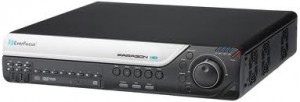
 

HD SDI CCTV, HD CCTV DVR, HD SDI DVR


The advancement towards high def cameras is now inevitable, Why use a an analogue camera which can only provide sub standard images when HDcctv cameras are now at a price point that makes them affordable to all.

Mega Pixel cameras allow incredibly detailed, high-definition footage to be viewed, stored and instantly recalled. HD CCTV gives you a far better chance of identifying a suspect in order to gain a conviction and offers numerous benefits to you over traditional analogue CCTV.

  • Allows you to actively identify suspects
  • Lossless compression ensures a level of quality suitable for use as evidence in order to gain successful convictions
  • Clear identification of facial features
  • Cost-effective recording
  • Fewer cameras required, resulting in cheaper installations and less bandwidth usage
  • Up to 15 times higher resolution when compared with analogue systems

HD images can now be provided over IP and existing coax. If you are using HD SDi cameras then this will be a solution using coax if they are IP then cat5 will be required.