Avigilon is an HD cctv solution that has really captured the imagination of the security industry and customers alike. The organization who are Canadian based have seen the growth of their company accelerate beyond anything that could have been expected just 3 years ago. The reason is quite clear to those in the know. Their cameras are well built, competitively priced and their software is the best in the business.

Avigilon enterprise software has some very creative features. The goal of any investigator interrogating post recorded images is the ability to zoom in without pixelation gaining additional detail that can be used in court . With Avigilon HD CCTV cameras this is finally possible. We can now read number plates and get quality facial recognition something that would have proved impossible with old analogue technology. The search features within the Avigilon software save hours of time trawling through video, the ability to bookmark and export information easily adds to the attraction of the product.

Avigilon have priced their goods to sell by using a scaled approach to upgrades it means the end user can retain some of his analogue infrastructure but equally he can upgrade that to HD at any time with the minimum of both cost and fuss. He can now decide exactly how much he wishes to invest into his security system.

Remote viewing is achieved through the use of a licence and you can view images remotely through your smart phone. It is now important the end user can now see everything from everywhere and not just live images, recorded images can be viewed to.

So a brief overview of Avigilon HD CCTV solutions. An IP based product that uses CAt5 not coax but like HD SDI we can use existing infrastructure. This is a very important approach to the overall solution and another reason why Avigilon HD seems to be taking the CCTV world by storm.
 

At the last IFSEC gathering in Birmingham 2012, the real buzz around the NEC was about this “new” technology that allowed us to send HD images over RG59 coax. The number of exhibitors that were showing various HD SDI CCTV products had grown from the previous year almost 10 fold and to many of the attendees it was a new concept to them after the constant hype that previously had surrounded IP

Why should they be surprised by the concept of HDcctv over coax? Well as an industry we had been told/conditioned to believe for many years that HD quality images could only ever happen over an IP network. We thought we would never see old coax being re-used and quite frankly believed that it all needed to be replaced by CAT5 as the HD revolution started to take hold.

Of course HDcctv is not quite new . The concept had been turned into reality around 2009 . What is remarkable is the speed from which it has gone from a simple idea thrown around in a discussion between an elite few to a real workable product that will help to shape the CCTV industry for the next 10-20 years.

HDcctv has its place. The desire to re-use an existing cabling infrastructure will seem like a very good idea to those companies who invested heavily in analogue and RG59. Small installations of 4,8 and 16 ways will be prime targets for salesman looking to push their HD SDI DVR and cameras. However the HDcctv alliance has been looking to add to their standard and get alliance approved HDcctv products to work over existing and new CAT5 as well as coax. This opens up a whole new world of opportunity for both upgrades and new installs.

So what does the future hold. As cost of equipment plummets as more volume is produced then soon HDcctv will cost the same as analogue. At that point end users will see little point in continuing to upgrade analogue with analogue, so faced with the choice between HD SDI and IP they will probably go for the most cost effective solution, time will tell what that will be.

Well plenty of banter on linkedin this week around the subject of price on HD SDI cameras verses the price of an HD IP equivalent. With some commentators now claiming you can purchase HD SDI products cheaper than their analogue equivalent the battle for HD supremacy is starting to hot up.

Of course in reality most installers and CCTV experts know that when you specify an HD camera installation there will be various different angles it can be approached but usually the ideal camera set up is easy to work out based on the site size and infrastructure.

The great thing for end users though is the desire for HD cctv solutions is driving the prices of all hd cctv cameras DVRs and NVRs downwards.

It has to be said though that the rise of HDcctv (HD over coax) is dramatic, the driving force has been the HDcctv alliance and camera manufacturers and chip designers have really bought into the idea. Of course some say that HD SDI CCTV is just a passing trend but its tolerance to criticism has so far been good and the products have become more diverse and indeed cheaper in a dramatic time frame.

Where will it all go from here? Well IP cameras and IP software solutions are giving us some fantastic images. Companies such as Arecont and Avigilon are showing us all the way to go with some excellent software and quality products but HD over coax has a huge market place using existing coax and fitting into many different applications. When the new HDcctv standard is released and we can also use CAT5 cable, who knows how quickly every camera installation will be HD quality and above.

Mix and Match IP.

A recent interview in this months PSI magazine  with Peter Ford the managing director of Pro-Vision made a fleeting but very interesting observation about the future of IP cameras and their associated software. Provision are a very well respected and successful CCTV equipment distributor so what they say should be paid attention to.

In the interview Peter made mention of how since the early seventies analogue CCTV had in effect been a mix and match of different manufacturers equipment and how well this had worked for the industry. However when it comes to IPCCTV Peter recommended that all IP kit for networked systems should come from one manufacturer.

He actually said “Historically the way CCTV has been over the 42 years that I have been working within security you would sell a Panasonic camera with a Fujinon lens, Dennard housing and a Hitachi monitor-a complete hybrid. However when it comes to an IP installation it makes sense to buy all of the equipment from the same manufacturer” Peter goes on to explain that by doing this it ” does away with any compatibility issues”

What then is the point of ONVIF?

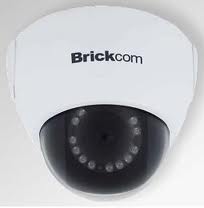
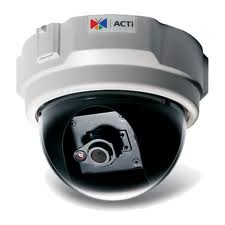
Brickcom IP cameraACTI IP cameras

An interesting point to say the least and one that should be opened to debate especially as this fundamental issue could prove to be crucial as to how IP CCTV develops and sells in the coming years. Indeed as Peter points out analogue has effectively been a series of hybrid systems since the early seventies a way of putting together different technologies has been the corner stone of the industry. The reason is simple. If a manufacturer goes bust or discontinues a product your security system does not suddenly become completely useless overnight.

With IP systems generally running off servers or PC’s we all know how quickly these require firmware/software/downloads just to keep them running. If the manufacturer of your single make IP system is not on the ball with regard to software or you upgrade your server and the system does not work , where are you left? In the lurch I would suggest.

The great thing about IP is the fact that it can provide HD CCTV images, this is the driving force behind the sale, but if a leading supplier of IP products does not trust a mix and match approach relying on ONVIF as the glue that stitches different manufacturers products together we either end up with just a few dominant companies and little competition or a technology that maybe backing itself into a corner.

360 vision have announced that they are to add a Predator CCTV camera to the range that is capable of of HD resolution using the new HD SDI technology.

The Predator has gone HD thanks to slip ring technology that now allows HD SDI data to pass through them without the loss of HD quality. Previously this had been impossible and had held back the development of a product that will help 360 vision capture the upgrade market whereby existing cameras run over RG59 coax can now easily be replaced with the predator camera and offer resolution that many other cameras in its class still cannot do. The HD SDI predator is the result and 360 vision see many applications where this HD SDI predator will be deployed.

Predator HD SDI camera

360 have also produced an IP megapixel version of the Predator camera that will give HD resolution over an IP network. This foray into the HD camera market has been coming for months and is a welcome addition to the Predator range that also has analogue and Thermal versions. The complete solution in fact.

To enable recording of the HD images either the March networks VMS software is an option for the IP version or for HD SDI 360 vision have released the 2 way HD SDi Avalon. This 2 way unit will interface easily with Avalon H and T software to mean that expansion of analogue systems can be achieved in small manageable steps. 4, 8 and 16 way units are planned but as yet are unavailable.