Well plenty of banter on linkedin this week around the subject of price on HD SDI cameras verses the price of an HD IP equivalent. With some commentators now claiming you can purchase HD SDI products cheaper than their analogue equivalent the battle for HD supremacy is starting to hot up.

Of course in reality most installers and CCTV experts know that when you specify an HD camera installation there will be various different angles it can be approached but usually the ideal camera set up is easy to work out based on the site size and infrastructure.

The great thing for end users though is the desire for HD cctv solutions is driving the prices of all hd cctv cameras DVRs and NVRs downwards.

It has to be said though that the rise of HDcctv (HD over coax) is dramatic, the driving force has been the HDcctv alliance and camera manufacturers and chip designers have really bought into the idea. Of course some say that HD SDI CCTV is just a passing trend but its tolerance to criticism has so far been good and the products have become more diverse and indeed cheaper in a dramatic time frame.

Where will it all go from here? Well IP cameras and IP software solutions are giving us some fantastic images. Companies such as Arecont and Avigilon are showing us all the way to go with some excellent software and quality products but HD over coax has a huge market place using existing coax and fitting into many different applications. When the new HDcctv standard is released and we can also use CAT5 cable, who knows how quickly every camera installation will be HD quality and above.
Mix and Match IP.

A recent interview in this months PSI magazine  with Peter Ford the managing director of Pro-Vision made a fleeting but very interesting observation about the future of IP cameras and their associated software. Provision are a very well respected and successful CCTV equipment distributor so what they say should be paid attention to.

In the interview Peter made mention of how since the early seventies analogue CCTV had in effect been a mix and match of different manufacturers equipment and how well this had worked for the industry. However when it comes to IPCCTV Peter recommended that all IP kit for networked systems should come from one manufacturer.

He actually said “Historically the way CCTV has been over the 42 years that I have been working within security you would sell a Panasonic camera with a Fujinon lens, Dennard housing and a Hitachi monitor-a complete hybrid. However when it comes to an IP installation it makes sense to buy all of the equipment from the same manufacturer” Peter goes on to explain that by doing this it ” does away with any compatibility issues”

What then is the point of ONVIF?

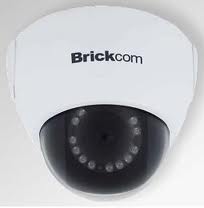
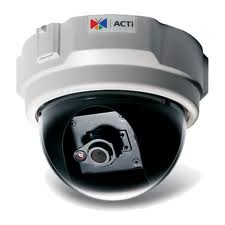
Brickcom IP cameraACTI IP cameras

An interesting point to say the least and one that should be opened to debate especially as this fundamental issue could prove to be crucial as to how IP CCTV develops and sells in the coming years. Indeed as Peter points out analogue has effectively been a series of hybrid systems since the early seventies a way of putting together different technologies has been the corner stone of the industry. The reason is simple. If a manufacturer goes bust or discontinues a product your security system does not suddenly become completely useless overnight.

With IP systems generally running off servers or PC’s we all know how quickly these require firmware/software/downloads just to keep them running. If the manufacturer of your single make IP system is not on the ball with regard to software or you upgrade your server and the system does not work , where are you left? In the lurch I would suggest.

The great thing about IP is the fact that it can provide HD CCTV images, this is the driving force behind the sale, but if a leading supplier of IP products does not trust a mix and match approach relying on ONVIF as the glue that stitches different manufacturers products together we either end up with just a few dominant companies and little competition or a technology that maybe backing itself into a corner.

360 vision have announced that they are to add a Predator CCTV camera to the range that is capable of of HD resolution using the new HD SDI technology.

The Predator has gone HD thanks to slip ring technology that now allows HD SDI data to pass through them without the loss of HD quality. Previously this had been impossible and had held back the development of a product that will help 360 vision capture the upgrade market whereby existing cameras run over RG59 coax can now easily be replaced with the predator camera and offer resolution that many other cameras in its class still cannot do. The HD SDI predator is the result and 360 vision see many applications where this HD SDI predator will be deployed.

Predator HD SDI camera

360 have also produced an IP megapixel version of the Predator camera that will give HD resolution over an IP network. This foray into the HD camera market has been coming for months and is a welcome addition to the Predator range that also has analogue and Thermal versions. The complete solution in fact.

To enable recording of the HD images either the March networks VMS software is an option for the IP version or for HD SDI 360 vision have released the 2 way HD SDi Avalon. This 2 way unit will interface easily with Avalon H and T software to mean that expansion of analogue systems can be achieved in small manageable steps. 4, 8 and 16 way units are planned but as yet are unavailable.

For a long time now many people have asked why the images  they see on crime watch are so poor. If you come from outside the CCTV community its hard to understand what is so difficult about producing a set of images that will actually be able to identify a criminal who is taking part in some kind of burglary, vandalism or any kind of illegal event that is captured on CCTV.

The truth is analogue CCTV was never going to cut it, well not unless you put hundreds of cameras into a system and recorded at ridiculously high frame rates. Memory has only recently become available that would allow the sort of length of recording time most consider necessary anyway.

So over the last few years the CCTV industry has taken short cuts. It has failed to sell enough cameras to cover a scene . It records but electronically throws away most of the information and worse of all we scimp on lighting and quality lenses. This adds up to gross mis-selling and customers who find that when they really need CCTV evidence it actually has never been captured beyond a set of jerky fuzzy images that make a laughing stock of CCTV installers.

To be fair though CCTV has actually worked to a degree over the years. It has deterered crime , it has led to convictions , confessions and resignations so the concept of CCTV cameras is a sound one.

Now the exciting news, We have the concept and now HD CCTV solutions can actually deliver images that will be not only be crystal clear but will be what most would consider excellent in quality. Of course with quality comes deterrent. HD CCTV solutions can deliver images that will be able to show criminals features and crimes taking place in addition HD cameras can also see number plates when sited and focused correctly as well as view processes such as scenes within a factory such as a  production process.

HD cameras are here now and we can deliver HD through IP or over coax the opportunity for clarity now is just beginning but with a few short years HD CCTV cameras will have transformed the CCTV industry beyond recognition. Those fuzzy unusable CCTV images of the past will be resigned to the history books

Optex the sensor manufacturer has become the first major supplier of detectors to introduce IP into their sensor range. Optex are taking a bit a of leap into the unknown here. Alarms and IP are not new but normally we would expect to convert a set a clean contacts from our sensing device into an IP format through IP converters and having them built into the sensor device itself certainly negates the need for this conversion process. A possible benefit and cost saving,  perhaps?.

Will this work? There are only certain VMS platforms that can accept the alarms directly and with so many end users keen to take advantage of existing equipment these days we can only see the sensors being specified on totally new installations.

However as IP becomes an ever greater influence on security system designs IP sensors are a logical step but will the demand live up to the expectation?

Below are the list of the Redwall devices available from Optex


REDWALL IP Products Overview


Laser Technology Detector   REDSCAN Series   

REDSCAN is an innovative and award-winning laser sensor for both vertical and horizontal applications (indoor/outdoor). It can identify the size, speed and distance of moving object and functions in effect like an invisible wall: 4 linked outputs for PTZ camera control

Product codesRLS-3060L-POE  RLS-3060SH-POE

Features:

  • 4 to 8 independently adjustable detection areas
  • Scene selection
  • Unique detection algorithm
  • IP66 housing

Passive Infrared Detector    REDWALL-V Series

REDWALL–V series is a cost-effective range of PIR detectors especially designed to work with CCTV systems and trigger an alarm for a camera, Network Video Recorder or Video Management Software. Covering a detection area from 30m wide angle to 100m long range the REDWALL-V series is equipped with OPTEX’s latest sensing technologies to reduce false alarms, enable quick and reliable installation, and protect from vandalism.


               Product codesSIP-3020-IP  SIP-4010-IP  SIP-404-IP 

SIP-3020/5-IP  SIP-4010/5-IP   SIP-404/5-IP

SIP-5030-IP    SIP-100-IP

    Features:

  • Volumetric detection area
  • Intelligent PIR detection system
  • Automatic sensitivity management
  • Anti-masking and anti-rotation function

Photo Beam Detector     REDBEAM Series

REDBEAM is a  series of photo beam detectors that consists of a pair of transmitter and receiver units for line protection.  It can also offer a line detection area similar to a trip wire for video analytics.


           Product codesBM-60QN-IP RBM-100QN-IP RBM-200QN-IP

Features:

  • Quad beam with aspherical lenses
  • Sniper viewfinderTM with 2X magnification
  • Vivid interior colour
  • IP65 water proof structure


Fence Protection   REDFIBER Series

The REDFIBER™-IP is a series of networked fibre optic sensor kits to be mounted on a fence or a wall and detect any intrusion attempt. The ready-to-deploy kits include everything from the fibre optic cable in conduit and the Alarm Processing Unit (APU) with the IP adapter to the enclosure box and the wire ties. This makes the REDFIBER-IP series a very reliable and cost-effective fibre optic perimeter solution for small and medium-sized sites.

                       Product code: REDFIBER

                                  Features:

  • One or two zone APU
  • Sophisticated algorithms to reduce false alarms caused by wind, small animals etc
  • Optical fibre cable resistant to EMI and corrosion included
  • Enclosure box
  • Wire ties
  • Integration with major VMS providers