An IP surveillance system has  long been the preferred upgrade path from analogue CCTV for both installers and end users alike. However an IP surveillance system is proving too expensive for end users and as a result this technology is finding it difficult to displace the analogue CCTV market at present. This is mainly due to the reluctance of end users to lose the investment they have already ploughed into their analogue CCTV solutions. Hybrid CCTV solutions however may be the answer? Still an IP surveillance system has far greater flexibility and given the budget most companies are looking at moving towards IP for all their security solutions.
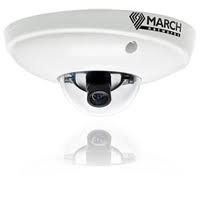
 

IP camera
Videosphere MegaPX nanodome

IP surveillance systems  have been around since around 1996 but bandwidth and network capacity have always been factors that has slowed the move to the uptake of end users towards an IP surveillance system however recent advancements in broadband speeds and network performance means that IP is now on the agenda for many. Security equipment manufacturers are now pushing harder for their IP kit to be installed . Still one of the limitations on the growth of IP surveillance systems has been the global recession and an apathy towards IP surveillance systems from entrenched CCTV installers. This will of course change as the price of an IP surveillance system begins to fall and the benefits become ever clearer. In the meantime however as we mentioned earlier Hybrid solutions will help ease us all into the IP surveillance way of thinking.
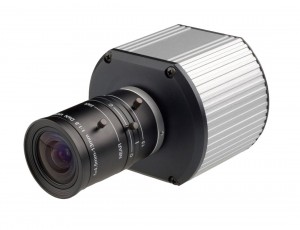
ip cameras


IP network camera solutions are beginning to take over the CCTV market place. The IP network camera has one major benefit over a traditional CCTV system, that’s flexibility. By using existing IT infrastructure an IP network camera can be placed anywhere in the world and viewed from anywhere you wish. With audio generally included in most models available the IP network camera is generally the first choice for IT professionals, but is it widely suitable for the CCTV industry?   Many would say yes and huge investment has taken place. The likes of Panasonic, Avigilon, Arecont, March Networks, Dallmeier, are just a few of the big names that have investeted millions of pounds into the IP network camera solution.

There is a school of thought however that has shed a little doubt on the future of the IP network camera. Can it compete against  HD SDI CCTV? Well the jury is out but the market place will migrate to HD security cameras and IP network camera solutions can deliver this technology.

Over the next few months we will see how the IP network camera evolves and when not if  we see IP CCTV overtake traditional analogue as the primary CCTV solution in the security market place.

HD CCTV . The new technology that gives you HD images over an existing coaxial cabling infrastructure . No need to rewire just upgrade the ends and add an HD SDI DVR.

1)  HD CCTV gives sharpe clear images.

2) HD SDI DVR s gives the end user the ability to zoom in either live or in record mode to areas of interest.

3) HD CCTV gives clearer images for remote monitoring centres

4) When using HD CCTV you have the ability to cover a wider area without loss of definition.

5) Better pictures gives better deterrent value.

6) HD CCTV uses the existing coaxial cable infrastructure.

7) HD CCTV means no re-training for engineers

8 ) HD CCTV means you have no worries regarding  contention, compression or IT network issues.

9) No laptops, software upgrades requires

10) HD CCTV gives more evidence for end user with greater quality.

Just a few reasons why HD CCTV is the way forward for the CCTV industry. The only surprise is that it has taken so long to catch on.

Why use HD-CCTV?

Thinking back to how CCTV used to be, remember when all was Black and White?

The big change in the industry came when colour CCDs were introduced…. It was the evolution that had the same impact as the domestic TV.

So really, it is natural that CCTV should have the same benefit as standard TV….. The ease at which it is possible to go from SD (Standard Definition) to HD (High Definition) has been a question on many people’s minds, particularly here in the UK


The Market is saturated with choice – some of it too saturated – but, there are plenty of solutions to choose from…..

But take a moment to think back to colour transition, both in domestic TV and CCTV….

It involved SWAPPING or REPLACING key components….. In the case of the TV, replacing the TV…..in the case of CCTV, replacing the camera and the monitor…… At no point did we have to rip up cables, change connectors etc etc….it was just end or end-to-end component changes….

HD-CCTV gives us that similar ability – just change the camera and the recorder and suddenly, SD becomes HD……..Remember when you bought that flashy new HD ready TV ? You unplugged your widescreen CRT TV, and plugged in the new one…..albeit with a HDMI cable for glorious HD output!!

And the term HD…. We’ve blogged before about how consumers just GET the term HD…..even to the point of not really caring HOW MUCH HD (720p, 1080p, megapixel etc etc)

And I think that is where this industry needs to push the term HD…… Reference CCTV images to those we now come to expect from our home TV sets…..

And that’s why HD-CCTV is such a powerful moniker…… It does what it says….no confusion, no IP this, megapixel that, bandwidth the other…. Simple cameras, cables (existing!) and recorders….

HD-CCTV Alliance over the other side of the Pond are doing a great job in promoting this technology….. We need to help them gain traction here in the UK where, in our opinion, IP has yet to REALLY take off in an industry wide acceptance way….. and also check out and subscribe to HD-CCTV Magazine – great source of information on this emerging technology

But…emerging??? HD-CCTV has been around since 2009, so let’s get it trending!!

HD-CCTV is all about upgrading existing systems to new, better, brighter, sharper more meaningful results

Same cable
Same skills
Little or no specialist IT knowledge

Take a look at HD-CCTV Alliance – sign up if you are a developer, manufacturer or simply just want to be part of this exciting new technology……but at the VERY least, let’s get this HD-CCTV term trending in our industry……

Brickcom launches its three megapixel network camera with full HD

FB-300A brickcom 3 megapixel IP camera

Brickcom has released the FB-300A the first full HD three megapixel network camera into its range

Delivering full HD at 1080P resolution Brickcom are pitching this camera as a potential replacement for a PTZ camera within an installation enabling end users potential savings on installation costs.

The series has been designed to The FB-300A camera is capable of streaming video at up to 2,032 x 1,526 megapixel resolution.The FB-300A series provides true day and night surveillance and is feature rich to allow it to operate with reduced bandwidth to suit storage requirements.”

Equipped with an Internet browser or 3G mobile phone, the camera can be accessed from anywhere and the FB-300A can also transmit the video to portable devices. POE enabled the camera can be integrated seamlessly onto an IP network and has the edge recording capability through an on board SD card.

Built-in motion detection allows the FB-300Aa version of the IP camera to support Intelligent Video Analysis, which can be used for applications such  people counting, and object tracking.

Brickcom are forward thinking and progressive in their design and the FB300A is no exception the fact that Brickcom were able to release this IP camera with such high resolution in time for IFSEC 2011 is a credit to them.